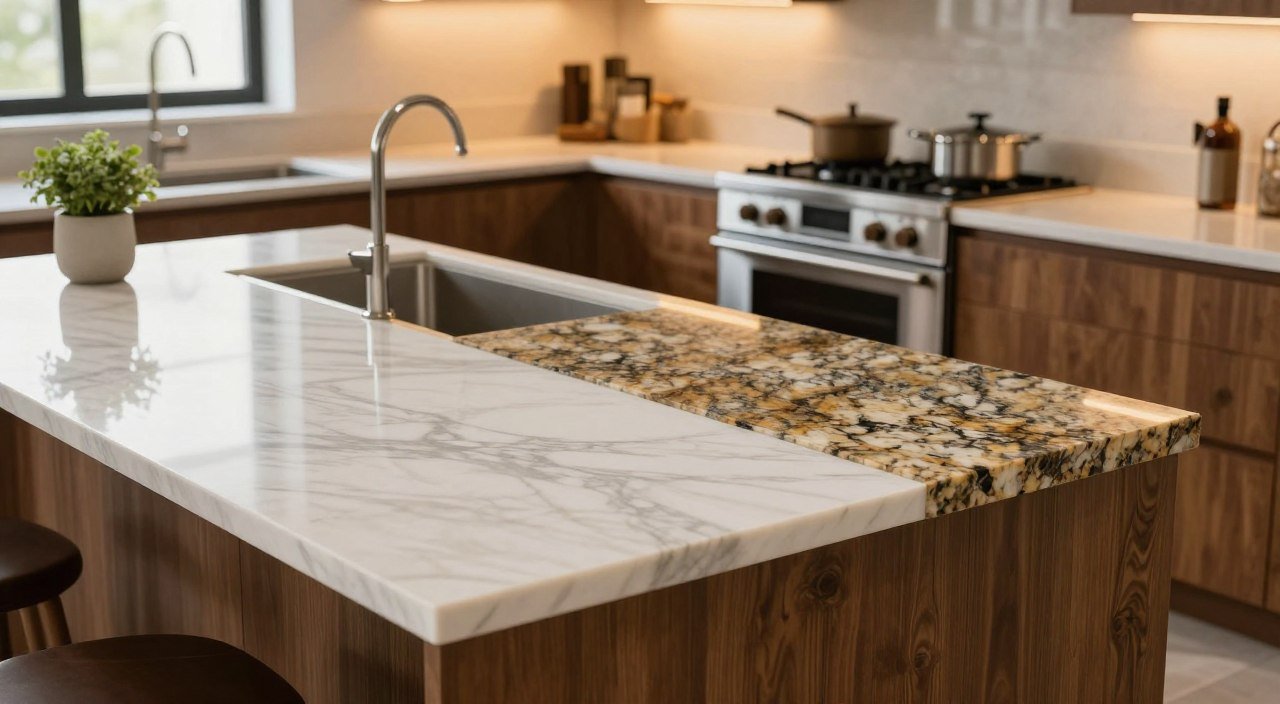
Planning a kitchen renovation is exciting. It changes your living space. But, picking the perfect surface is hard.
Choosing between Quartz vs granite countertops is tough. Both are great for your home.
Your kitchen is the heart of your home. Your choice affects daily life and property value. You want a surface that looks great and lasts long.
This guide helps you understand the differences. Knowing how each material works helps you make a smart choice. Let’s find the best surface for your dream kitchen.
Understanding the Basics of Countertop Materials
Kitchen surfaces have changed a lot over time. Old kitchens had simple wood planks or basic ceramic tiles. Now, we have many advanced options for busy homes.

The Evolution of Kitchen Surfaces
Old kitchens had surfaces that stained easily or warped. Natural and engineered stone changed kitchen design. Granite countertops became popular for their beauty and strength.
New technology brought engineered solutions to natural stone’s limits. Quartz countertops offer a non-porous surface that looks like marble or granite. These modern countertop materials changed kitchen workspaces.
Why Choosing the Right Material Matters
Choosing the right surface is key for your kitchen’s future. It’s not just about color or pattern. It’s about a surface that can handle daily spills, heat, and heavy use. Making an informed choice saves money in the long run.
Knowing about countertop materials helps you decide what’s important. Whether you like granite countertops or quartz countertops, your choice shows your kitchen’s personality. Investing time in this research keeps your home beautiful and functional for years.
Quartz vs granite countertops: A Deep Dive into Composition
To understand quartz and granite, look at where they come from. Both are popular for kitchens, but they start differently. You might like the natural look of granite or the precision of quartz.

How Natural Granite is Formed and Extracted
Granite is a natural igneous rock made deep in the Earth. It cools slowly, making it dense and crystalline. Because of Earth’s pressure, no two slabs are the same.
Quarries use big machines to cut granite blocks. Then, they slice these blocks thin and polish them. This shows granite is a natural, finished product.
The Engineered Process Behind Quartz
Quartz is made in factories, not found in nature. It’s made from minerals and synthetic materials. This makes it consistent and flexible in design.
Binding Agents and Pigments
The differences between quartz and granite show in their binders. Quartz has 90% to 93% stone, with the rest being resin and pigments. These resins hold the stone together and make it non-porous.
The Role of Natural Quartz Crystals
Natural quartz is key in quartz slabs. It makes them very durable and resistant to wear. You get a surface that looks like stone but is made with modern technology.
| Feature | Natural Granite | Engineered Quartz |
|---|---|---|
| Origin | Geological formation | Factory manufacturing |
| Composition | 100% Natural stone | 90% Stone, 10% Resin |
| Consistency | Unique, varied patterns | Uniform, predictable |
| Porosity | Naturally porous | Non-porous |
Comparing Durability and Resistance
Kitchen tasks test your countertops every day. They must handle chopping and hot pans well. Knowing quartz vs granite durability helps choose the right material for you.

Heat Resistance and Thermal Shock
Granite, a volcanic stone, resists high heat well. You can put a hot skillet on it without damage. But, sudden temperature changes can crack it.
Quartz countertops are made with resins. They can melt or change color with intense heat. Always use a trivet or hot pad to protect them.
Scratch and Chip Vulnerability
Both materials are very hard. But, they handle sharp impacts differently. Granite resists knife scratches well. But, it might chip if hit hard.
Quartz is also scratch-resistant. It often beats natural stone in this area. Remember, quartz can still get damaged by heavy impacts.
Porosity and Staining Potential
The structure of your countertop affects spills. Natural stone, like granite, is porous. It can soak up liquids if not sealed.
Sealing Requirements for Granite
Granite needs a sealant to stop stains. You must reapply this sealant often. This keeps your counters safe from moisture and bacteria.
Non-Porous Nature of Quartz
Quartz is made to be non-porous. It naturally keeps liquids out and resists stains. This makes it great for families who want easy-to-clean surfaces.
«The ideal kitchen surface balances aesthetic beauty with the practical reality of daily use, ensuring that your investment remains pristine despite the rigors of cooking.»
| Feature | Granite | Quartz |
|---|---|---|
| Heat Resistance | Excellent | Moderate |
| Scratch Resistance | High | Very High |
| Porosity | Porous | Non-Porous |
| Maintenance | Requires Sealing | Low Maintenance |
Maintenance and Cleaning Requirements
Keeping your countertops looking great is easy. Knowing the differences between quartz and granite helps a lot. A simple cleaning routine keeps them looking new.
Daily Cleaning Routines for Both Surfaces
For daily cleaning, keep it simple. Use a soft cloth and warm water with mild dish soap. Don’t use harsh chemicals or rough cleaners.

Handling Stubborn Stains and Spills
Spills happen, but act fast to avoid stains. Blot spills, don’t wipe them. For granite countertops, use a special stone cleaner for tough stains.
Engineered stone can usually handle spills with a gentle cleaner. Make sure the cleaner is safe for your stone to avoid damage.
Long-Term Care and Maintenance Schedules
Long-term care depends on your countertop type. Natural stone needs sealing every six to twelve months. This keeps it safe from liquids and germs.
Engineered stone, on the other hand, is easy to care for. It doesn’t need sealing. Regular deep cleaning keeps your kitchen clean and nice for years.
Aesthetic Appeal and Design Versatility
Your choice of surface material is key in your kitchen. It sets the mood for the whole room. When you pick kitchen countertops, you’re choosing more than just a work area. You’re picking a look that shows off your home’s style.
The Natural Beauty of Granite Patterns
Granite is loved for its organic, one-of-a-kind look. Since it’s a natural stone, every slab is unique. This makes it special and hard to find elsewhere.
Granite has cool veining, flecks of mica, and deep minerals. These add drama and make your space feel earthy luxury.
«Design is not just what it looks like and feels like. Design is how it works.»
Steve Jobs
Consistency and Color Options in Quartz
Engineered quartz is great for a uniform look. It’s made, so you get the same pattern and color everywhere. This makes planning your space easier, like for big islands or kitchen countertops.
You can pick from many colors, from solid whites and grays to designs that look like marble or concrete.
Matching Countertops to Your Kitchen Style
The right surface should match your home and taste. Whether you like sleek or cozy, the right material makes your kitchen both useful and beautiful.
Modern and Minimalist Kitchens
Quartz is perfect for modern kitchens. Its clean, monochromatic look fits well with modern, simple spaces.
Choose a matte finish or a fine pattern for a sleek look. These kitchen countertops let your cabinets and appliances shine.
Traditional and Rustic Kitchen Designs
For traditional or rustic kitchens, granite is a great choice. Its warm, variegated tones go well with wood cabinets and farmhouse decor.
- Use granite with deep earth tones to ground a rustic kitchen.
- Select stones with high movement to add energy to traditional spaces.
- Consider honed finishes to soften the look and feel of your stone surfaces.
Cost Analysis and Budget Considerations
When looking at materials, the quartz vs granite price is key for many. Both have benefits, but your budget will depend on more than just the stone’s cost.
Factors Influencing the Price of Granite
Granite prices mainly depend on its rarity and where it comes from. Rare colors or special patterns cost more because they’re hard to find and move.
The slab’s thickness also affects the price. Thicker slabs, like 3cm, are pricier but stronger for counters.
Understanding the Cost Structure of Quartz
Quartz prices are more set than natural stone. The quartz vs granite price often tips in quartz’s favor for consistent color and easy care.
Quartz costs depend on the brand, design, and resin used. Fancy designs that look like marble are the most expensive.
Hidden Costs of Installation and Fabrication
Many are surprised by extra fees during the process. Cutting the stone to fit your space is a big labor cost.
Edge profiles also add to the cost, as detailed designs take more time and skill. Plus, remember to budget for removing old counters and plumbing changes for your new sink.
| Cost Component | Granite Investment | Quartz Investment |
|---|---|---|
| Material Cost | Moderate to High | Moderate to Premium |
| Fabrication Fees | Standard | Standard |
| Edge Profiles | Variable | Variable |
| Installation Labor | High | High |
Environmental Impact and Sustainability
Sustainability is key for today’s homeowners. When looking at pros and cons of quartz countertops and natural stone, think about the planet. Your choice affects your kitchen’s look and the earth’s health.
Sourcing and Extraction of Natural Stone
Granite comes from the earth. It needs big machines and harms the land. The energy to cut, move, and polish stone is a lot.
It’s important to quarry responsibly. This means not hurting animals or the soil. Look for companies that care about the earth and are open about where they get their stone.
Manufacturing Processes for Engineered Quartz
Engineered stone is made in factories. It uses heat and special tools, which pollutes. But, makers are using less energy now.
Quartz has synthetic resins, which are strong but made from oil. Now, some makers are using plant-based resins to be greener.
Eco-Friendly Options in Countertop Selection
There are green choices for countertops. Some brands use recycled glass or post-industrial waste in their stone. This saves raw materials and works well.
Look for GREENGUARD or NSF when buying countertop materials. These signs mean the products are safe and eco-friendly. Choosing these helps keep your kitchen healthy and green.
Installation Processes and Professional Requirements
Getting your kitchen countertops to look perfect is all about the installation. The stone is beautiful, but the real magic happens when a pro cuts and mounts it. They have the right tools and know-how to work with heavy, delicate slabs without hurting your home.
Why Professional Fabrication is Essential
Fabrication is more than just cutting stone. It’s about getting the measurements right, polishing edges, and making sure it’s strong for everyday use. Professional fabricators use special machines to make sure every cut is perfect.
Trying to do it yourself can lead to cracks or uneven surfaces. Experts know how to make sure sinks and cooktops fit right. This keeps your kitchen countertops looking good for a long time.
Timeline and Preparation for Your Kitchen
Before the pros come, you need to get your kitchen ready. Clear out your cabinets and remove old surfaces if needed. Make sure plumbing and electrical lines are safe to disconnect.
The job usually takes one to two days, depending on how complex it is. Your contractor will tell you when to expect them. Plan on not using your kitchen for a bit. A clean space helps the team do their best work.
Handling Seams and Edge Profiles
Seams can worry homeowners, but they’re a must for big kitchen countertops. A good fabricator will make them almost invisible. Talking about where the seams will go helps you understand the plan.
Edge profiles are also important. They affect how your kitchen looks and feels. Whether you want sharp or rounded edges, the finish is key. Here’s what you need to think about:
| Feature | Professional Role | Your Responsibility |
|---|---|---|
| Measurements | Laser templating | Clear all clutter |
| Seam Placement | Strategic alignment | Review layout plan |
| Edge Profiling | Precision polishing | Select desired style |
| Final Sealant | Application of finish | Follow care instructions |
Resale Value and Long-Term Investment
Choosing the right countertop material is key for your home’s value. A top-notch kitchen surface is a major selling point for buyers. Knowing the difference between quartz and granite helps you make a smart choice.
How Countertops Influence Home Appraisal
Appraisers see the kitchen as the most valuable room. Upgrading to premium stone surfaces can boost your home’s value. Natural stone and high-end engineered surfaces are seen as permanent upgrades.
While an appraisal looks at the home’s overall condition, finishes matter too. Buyers are willing to pay more for kitchens that don’t need quick fixes. Durable materials keep your home competitive in the market.
Buyer Preferences in the Current Real Estate Market
Today’s homebuyers want convenience and a consistent look. Many prefer surfaces that are easy to clean and don’t need frequent sealing. Engineered stone is popular for its clean, uniform look.
But, natural stone still attracts luxury buyers. A kitchen that’s both beautiful and practical is key. Think about your neighborhood’s buyers when choosing.
Longevity and Wear Over Time
It’s important to know the difference in quartz vs granite durability. Granite is very hard and can handle high heat. Quartz, on the other hand, is great at resisting stains and needs little upkeep.
Both materials last a long time with proper care. Choosing a surface that stands up to daily use keeps your kitchen looking great. This is crucial for keeping your home’s value up.
| Feature | Granite | Quartz |
|---|---|---|
| Maintenance | Requires Sealing | Low Maintenance |
| Resale Appeal | High (Natural) | High (Modern) |
| Durability | Heat Resistant | Stain Resistant |
| Investment Value | Excellent | Excellent |
Conclusion
Choosing between quartz and granite is a big decision. It depends on your daily habits and what you want your kitchen to look like. You now know the differences between natural stone and engineered surfaces.
Your kitchen renovation is a big deal for your home. You need to think about your budget and what you want your kitchen to look like. Consider how your family uses the kitchen and which material fits your lifestyle best.
Brands like Cambria or Silestone offer great options for today’s homes. Natural granite slabs from local suppliers add a unique touch to your kitchen. Both options will make your kitchen beautiful for years to come.
Go to a showroom to see these materials up close. Feeling the textures and seeing the colors in natural light will help you decide. You’re ready to make your kitchen a place that’s both functional and beautiful, showing off your personal style.
FAQ
What are the primary differences between quartz and granite in terms of composition?
Quartz and granite are different in where they come from. Granite is a natural stone found in the earth. Every slab is unique.Quartz countertops are made from about 90-95% crushed quartz crystals. They mix these with polymer resins and pigments for colors and patterns.
When comparing quartz vs granite durability, which material is more resistant to damage?
Both are very tough. Quartz is easier to use because it doesn’t chip like stone. Granite is good against scratches and heat but can stain if not sealed.
What are the pros and cons of quartz countertops regarding heat resistance?
Quartz can get damaged by very hot pans. It’s held together by resin. Granite can handle hot pans but using trivets is still a good idea.
How does the quartz vs granite price compare for a typical kitchen renovation?
Both cost between $50 to $150 per square foot. Granite prices change based on the stone’s rarity and shipping. Quartz prices are more stable, based on the brand and design.
Do granite countertops require more maintenance than engineered quartz?
Yes, granite needs more care. It needs a sealer at least once a year. Quartz never needs sealing, making it easy to care for.
Which material offers better aesthetic options for a modern, minimalist kitchen design?
Quartz is great for a clean look. It comes in many colors and patterns. Granite has a unique, natural beauty that’s hard to match.
Will choosing quartz or granite affect my home’s resale value?
Both are high-end upgrades that increase your home’s value. Quartz is popular for its durability. Granite shows luxury. Choose based on your area’s trends and your home’s style.