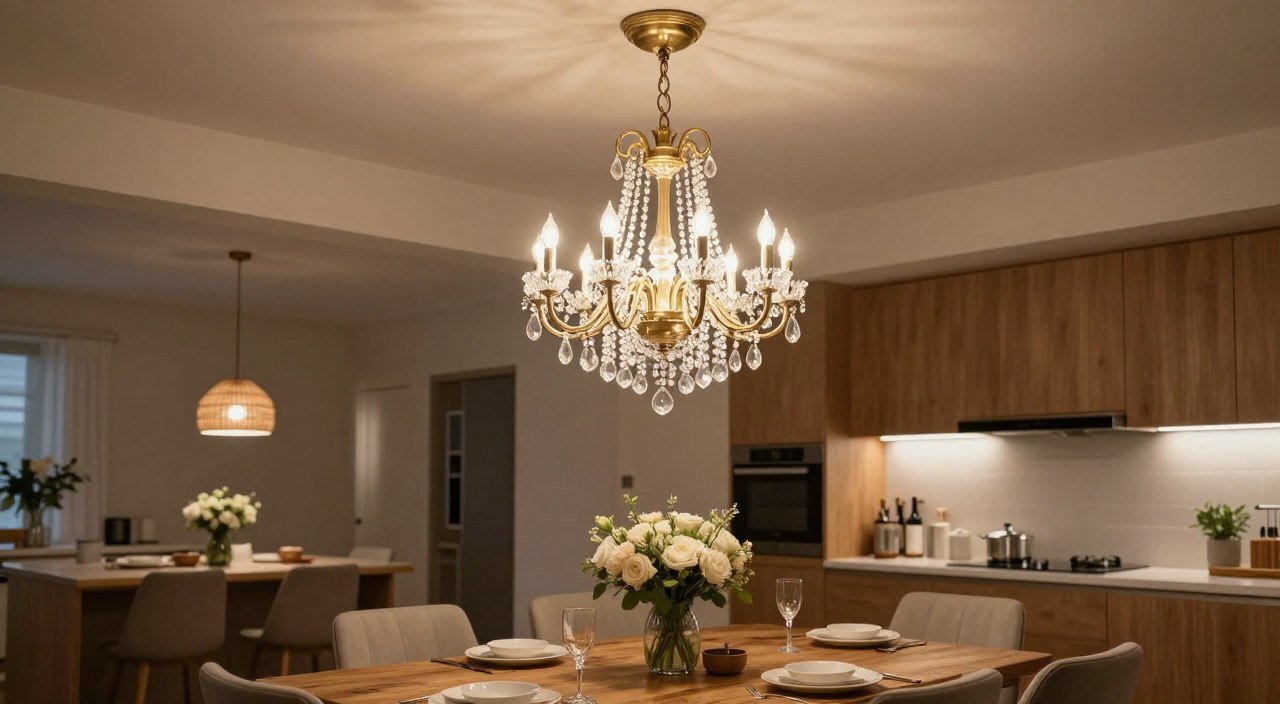
Your home lighting does more than just brighten a room. It sets the mood for every gathering. The right fixture acts as a stunning focal point that anchors your space.
It reflects your unique personality. Whether you like modern minimalism or classic elegance, the right choice makes your daily routine better.
Finding the perfect balance is key. You want a piece that provides warm, inviting illumination. It should also match your existing decor.
Exploring different kitchen chandelier designs helps you create a welcoming space. A place where friends and family love to stay longer.
Great lighting makes any meal special. By choosing the right scale, height, and style, your room will feel both polished and comfy. Let us show you how to brighten your home with style and confidence.
Assessing your dining space and lighting needs
Creating the perfect atmosphere starts with knowing your dining room’s size. Before looking for lights, understand your home’s layout. This ensures your dining room lighting fits well, not too much.
Measuring your dining table dimensions
First, measure your table’s length and width. These numbers help pick the right light for your table.
If your table is long, a long chandelier works well. For round or square tables, a single light in the center looks best.
Determining the appropriate ceiling height
Your ceiling height affects how low your chandelier can hang. Standard ceilings are good for a classic look. But, high ceilings might need adjustable chains.
Measure from floor to ceiling to find the right height. This keeps guests moving freely without being blocked by the light.
Identifying the primary function of your dining area
Think about how you use your dining area every day. A formal room needs different dining room lighting than a casual spot.
The table below shows how to match your room’s needs with the right lighting and ceiling height:
| Room Usage | Lighting Priority | Recommended Height |
|---|---|---|
| Formal Dining | Ambient & Elegant | 30-34 inches above table |
| Casual Kitchen | Task-Oriented | 28-32 inches above table |
| Multi-purpose Area | Dimmable Versatility | 30-36 inches above table |
Kitchen chandelier design ideas for dining areas to match your style
Your chandelier is the star of your dining room. It must match your taste and your home’s style. The right one can make your space look amazing.

Modern minimalist fixtures for clean aesthetics
A modern chandelier is great for simple tastes. They have clean lines and colors. This makes your room look neat and stylish.
Rustic farmhouse chandeliers for a cozy atmosphere
Farmhouse lighting brings warmth to your space. It uses natural materials like wood. This makes your home feel cozy and welcoming.
Industrial metal designs for an urban edge
An industrial pendant is perfect for modern homes. They show off raw materials and bulbs. These designs add a cool, urban feel to your space.
Crystal and glass options for traditional elegance
A crystal chandelier adds luxury to your dining room. They reflect light beautifully. This makes your room feel fancy and elegant.
Selecting the right size and scale for your chandelier
Scale is key to a balanced dining room. A too-small fixture looks lost, while a too-big one overwhelms. Choosing the right dining table lighting makes your room feel just right.

Calculating the ideal diameter for your table
A good chandelier size guide uses a simple formula. Measure your table’s length and width in feet. Add these numbers together. The sum in inches is the ideal diameter for your chandelier.
For example, a 6×3 foot table needs a 9-inch chandelier. This is a solid starting point. You can adjust it to fit your taste.
| Table Length | Recommended Diameter | Fixture Style |
|---|---|---|
| Up to 60 inches | 20 – 24 inches | Minimalist |
| 60 – 72 inches | 26 – 30 inches | Linear |
| Over 72 inches | 32 – 36 inches | Statement |
Adjusting for room volume and open-concept layouts
In open-concept homes, lighting must work with the space. High ceilings need bigger or dramatic fixtures. Make sure your chandelier doesn’t clash with other lights.
«Lighting is the jewelry of the home; it should be scaled to complement the room’s architecture rather than fight against it.»
— Interior Design Pro
Balancing visual weight with existing furniture
Visual weight is how furniture looks to the eye. A solid wood table can handle a substantial chandelier. But a glass table looks best with light, airy designs.
Think about your chairs and sideboard when choosing. This balance makes your dining table lighting look great with the whole room.
Choosing the perfect light output and bulb temperature
Finding the right dining room ambiance is more than just picking a pretty light. The light’s quality changes how your space feels. It’s important for both morning coffee and evening dinner.

Understanding lumens for dining comfort
When picking bulbs, look at lumen requirements, not just wattage. Lumens show how bright a bulb is. This is key for seeing your food well without feeling too bright.
For a dining area, aim for 30 to 40 lumens per square foot. Proper brightness keeps your eyes comfortable and your table the room’s center.
Selecting color temperatures for mood setting
The color temperature of your bulbs affects your home’s mood. It’s measured in Kelvins (K). The right choice sets the mood of your dining area.
Warm white versus cool white lighting
Designers often suggest warm white lighting, between 2,700K and 3,000K, for dining. It creates a cozy, inviting glow. Cool white light, over 4,000K, can feel harsh for a meal.
While cool tones might look modern, warm hues are better for skin tones and food.
Incorporating dimmable features for versatility
The best way to control your dining room ambiance is with dimmable lighting. It lets you change the light’s brightness for different times or events. You can brighten for homework or dim for dinner.
Make sure your bulbs work with your dimmer switch to avoid problems. This makes your lighting both functional and beautiful for a long time.
Step-by-step guide to installing your new chandelier
Ready to make your dining area shine? This guide will help you install your new chandelier safely. Take your time to make sure it stays stable and works well for years.

Gathering necessary tools and safety equipment
Before starting your chandelier installation, get all the right tools. Having everything ready saves you from climbing up and down the ladder too much.
| Tool Name | Primary Function | Safety Level |
|---|---|---|
| Voltage Tester | Confirms power is off | Essential |
| Wire Strippers | Prepares electrical wires | High |
| Adjustable Ladder | Provides stable access | High |
| Safety Glasses | Protects eyes from debris | Essential |
Turning off power and removing the old fixture
When working with electricity, safety comes first. Find your home’s breaker box and turn off the power to the dining room. This is crucial before you start.
Use a voltage tester to check if there’s power in the wires. If it’s safe, take out the old fixture. Remove the canopy and wire nuts carefully.
Wiring the new chandelier safely
Connecting the wires is key in your light fixture installation. Match the black wire to the hot wire, white to neutral, and green or copper to ground.
Make sure all connections are tight and use wire nuts. If you’re not sure, get a professional to avoid risks.
Securing the canopy and adjusting the chain length
After wiring, tidy up the wires in the junction box. Put the canopy up and screw it tight until it’s even with the ceiling.
Adjust the chain to hang the chandelier just right above your table. A well-installed chandelier installation looks great and is safe.
Positioning your chandelier for optimal impact
Putting your lighting fixture in the right spot is key to making your dining area look great. A well-placed chandelier becomes a stunning focal point instead of a mess. It’s all about looking good and working well.
Determining the correct hanging height above the table
The hanging height is super important. For rooms with eight-foot ceilings, hang it 30 to 36 inches above the table. This keeps the light from getting in your way.
If your ceiling is taller, you can hang it a bit higher. Just sit at the table to make sure it doesn’t cause glare or block talking.
Aligning the fixture with the center of the dining space
Start by putting the chandelier right over the dining table’s middle. This makes the room feel balanced. If the table isn’t in the middle, hang the light over the table instead.
Use a plumb line or laser level to make sure it’s straight. A little bit off can make the room look unbalanced and chaotic. Double-check your measurements to avoid moving it later.
Creating symmetry with surrounding architectural elements
Think about how your chandelier fits with your home’s design. Look at crown molding, windows, and wall art to help place it. This makes the light fixture seem like a natural extension of the room.
In open-concept spaces, make sure the chandelier doesn’t fight with other lights. Keeping things consistent makes your living and dining areas look cohesive and polished. When everything matches, your dining area will feel welcoming and planned.
Maintenance and cleaning tips for long-lasting brilliance
Keep your chandelier shining to make your dining room decor stand out. Regular lighting maintenance stops dust and dirt from dulling your light. A simple cleaning routine keeps your home looking great.
Dusting delicate glass and crystal components
Be gentle when cleaning glass and crystal parts. Use a soft, lint-free cloth to wipe each piece. For tough spots, a soft-bristled brush works well without scratching.
Stay away from strong cleaners that can cloud your crystals. If they look dull, a damp microfiber cloth might help. Always hold the crystal steady while cleaning to avoid breakage.
Cleaning metal finishes without damaging surfaces
Metal parts like brass or nickel need special care. Use a dry, soft cloth to dust regularly. For smudges, a damp cloth with mild soap is okay for most finishes.
Don’t use rough sponges or harsh polishes unless it’s safe. Harsh chemicals can harm your metal. Keeping metal clean is key to your dining room decor.
Replacing bulbs safely and efficiently
Always turn off the power and let the fixture cool before changing bulbs. This keeps you safe from burns and electrical dangers.
Make sure to use the right wattage and type of bulb. Wrong bulbs can overheat and damage your fixture. Keep spare bulbs ready to avoid dark dining areas.
| Component | Cleaning Frequency | Recommended Tool |
|---|---|---|
| Crystal Prisms | Every 3 Months | Microfiber Cloth |
| Metal Frame | Every 6 Months | Soft Cotton Cloth |
| Light Bulbs | As Needed | Clean Dry Gloves |
Common mistakes to avoid when choosing dining lighting
Getting the right feel in your dining area means avoiding common mistakes. Many people focus on looks but forget about the technical stuff. This can lead to lighting mistakes that make your space less comfy.
Avoiding fixtures that are too small or too large
Choosing a chandelier that’s not the right size is a big mistake. A small one looks lost, and a big one can take over the room.
Measure your table before you buy a light. A light that matches your table size makes your space look better.
Preventing glare by choosing the right shades
Glare can ruin your dining time. If your bulbs are out or your shades are thin, the light can be too harsh.
Try using frosted glass or fabric shades. They make the light softer and more welcoming.
Ensuring the light does not obstruct views
Your chandelier should be a highlight without blocking views. If it’s hung too low, it can make talking hard.
Hang your light so it’s above your head when sitting. This keeps your space feeling open and comfy.
| Common Mistake | Negative Impact | Recommended Solution |
|---|---|---|
| Incorrect Scale | Visual imbalance | Match fixture to table size |
| Exposed Bulbs | Harsh glare | Use shades or diffusers |
| Low Hanging | Obstructed views | Adjust chain for eye level |
| Poor Temperature | Cold atmosphere | Select warm-toned bulbs |
Conclusion
Choosing the right chandelier is a big step in making your home better. It turns your dining area into a special place for friends and family.
Using these tips helps you pick a light that looks good and works well. You can make a space that shows off your style and is bright enough for meals.
Companies like Visual Comfort and Rejuvenation have many styles to choose from. They help you find a light that goes well with your other furniture and decor.
Your dining room needs a light that will last a long time. By choosing quality and the right size, you impress everyone who visits.
Think about your space and use these tips. Your careful planning will make a beautiful place that adds warmth and character to your life.
FAQ
How do I determine the correct chandelier size for my dining table?
First, measure your dining table’s width or diameter. Then, subtract 12 inches. This size is perfect for lighting without being too big.For example, a 48-inch wide table fits well with a 36-inch chandelier. This keeps everything balanced.
What is the recommended hanging height for a kitchen chandelier?
For an 8-foot ceiling, hang the chandelier 30 to 36 inches above the table. If your ceiling is taller, add 3 inches for each extra foot. This avoids blocking views and looks better.
How can I choose the right color temperature for a dining room?
Color temperature affects the mood of your dining area. Warm white bulbs (2700K to 3000K) create a cozy feel. Avoid cool white lights, as they can feel cold.Use dimmable switches to change the light for different times. This makes your dining area more inviting.
Which chandelier styles are best for modern versus traditional homes?
Modern homes look great with minimalist or industrial metal chandeliers. West Elm has these styles.Traditional homes shine with crystal or glass chandeliers from Schonbek. For a cozy feel, try farmhouse chandeliers with wood.
What are the essential steps for a safe DIY chandelier installation?
Always start by turning off the power at the breaker box. You’ll need tools like a voltage tester and wire strippers.After removing the old fixture, wire the new one carefully. Connect the wires and adjust the chain to the right height.
How do I maintain the brilliance of my glass or crystal fixture?
Clean your fixture regularly to avoid dust. Use a microfiber cloth and a special cleaner for Swarovski crystal or glass.For metal finishes, use a soft, dry cloth. Always use the right wattage bulbs to prevent overheating.
What common mistakes should I avoid when selecting dining area lighting?
Don’t choose a fixture too small for an open-concept layout. This makes the light less effective.Be careful of glare. Use Edison bulbs or frosted shades if your chandelier has exposed bulbs. Make sure the fixture is centered over the table for symmetry.