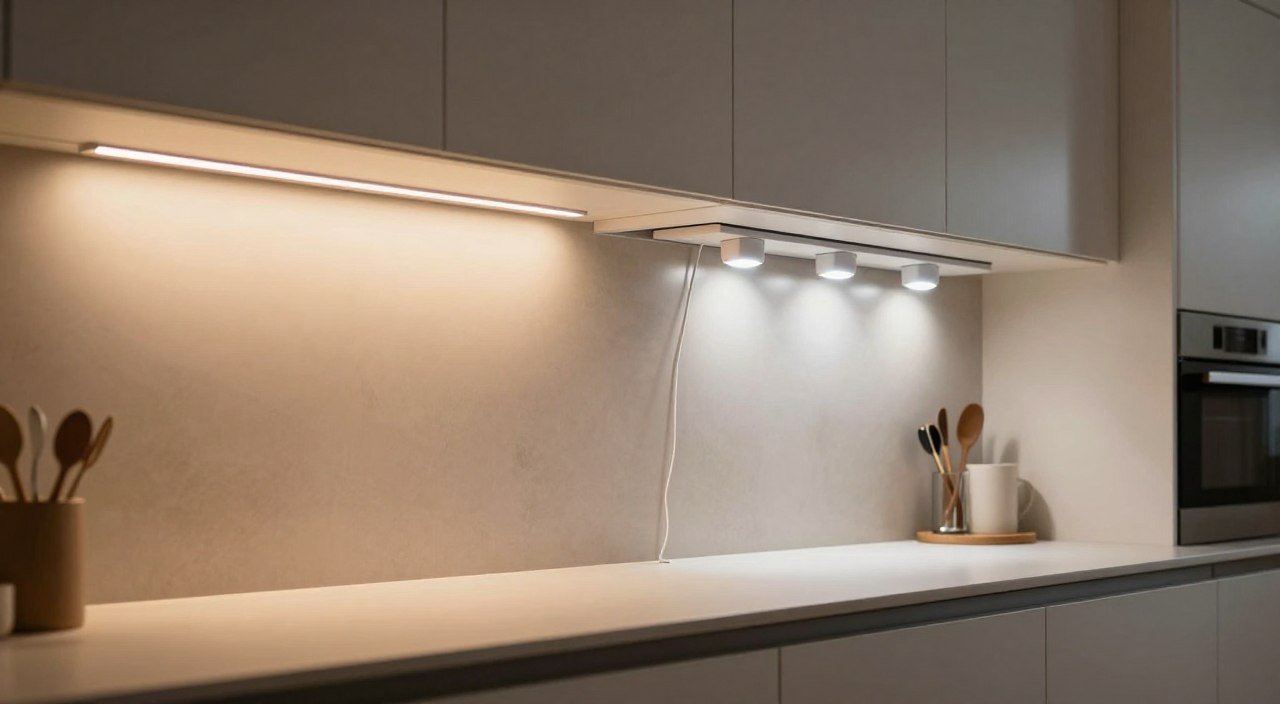
Upgrading your kitchen often starts with the right light. You need to pick a setup that looks good and works well.
Do you want a sleek, professional look or an easy DIY fix? Knowing your options is key. This guide will help you choose the best lighting for your kitchen.
Choosing the right system makes a big difference. It affects how your kitchen looks and works. By thinking about what you need, you can make your kitchen beautiful and efficient for a long time.
Key Takeaways
- Hardwired systems look clean and permanent, without cords.
- Plug-in models are easy and affordable, great for renters or quick changes.
- Think about your electrical needs before picking a permanent setup.
- How you manage power and wiring affects the look.
- Your choice depends on how comfortable you are with DIY projects.
Understanding the Basics of Under Cabinet Lighting
Getting the right kitchen lighting design starts with knowing the area under your cabinets. Proper under cabinet lighting installation makes your kitchen work better. It helps get rid of shadows from overhead lights.
Why Lighting Matters in Your Kitchen Workspace
Your kitchen is the center of your home. It needs good light for safety and to work well. Task lighting gives you the bright light you need to chop veggies or read recipes easily.
This light also makes your home look better. It shows off your backsplash and makes your kitchen feel welcoming. It turns your kitchen into a place where you can cook like a pro.

Types of Light Sources: LED vs Xenon vs Fluorescent
Choosing the right light is key for happiness. LED kitchen lights are the best because they save energy and last a long time. They also stay cool, which is safe in a busy kitchen.
Xenon bulbs give a warm light that people like. But they get hot and use more power than newer lights. Fluorescent lights are cheap but might flicker or take time to get bright.
| Light Source | Energy Efficiency | Heat Output | Lifespan |
|---|---|---|---|
| LED | Excellent | Very Low | Long |
| Xenon | Low | High | Moderate |
| Fluorescent | Moderate | Low | Moderate |
Hardwired vs plug in under cabinet kitchen lighting: Key Differences
When you plan your kitchen lighting design, the power method matters a lot. Hardwired or plug-in systems change how you install and use your lights.
Defining Hardwired Systems
Hardwired systems go straight to your home’s electrical supply. They make a permanent connection without any cords. You need a wall switch to turn them on.
This is great for a clean look. It makes your lights seem like part of your cabinets, not an add-on.
Defining Plug In Systems
Plug-in systems use your wall outlets for power. They have a cord that plugs into an outlet. This makes them easy for DIY projects.
They’re perfect for renters or those who don’t want to mess with wiring. You can set them up without touching your home’s wiring.

How Installation Methods Impact Your Kitchen Design
Choosing between hardwired vs plug in under cabinet kitchen lighting changes your kitchen’s look. Hardwired lights are simple and sleek. Plug-in lights are flexible and easy to move.
Think about these main points for your kitchen lighting design:
- Aesthetics: Hardwired systems hide wires, while plug-in lights might need cord covers for a clean look.
- Installation: Hardwired lights need a pro, but plug-in lights are easy to install yourself.
- Control: Hardwired lights use wall switches, while plug-in lights have switches on the fixture.
- Flexibility: Plug-in lights are easy to move if you change your kitchen layout.
Your choice should match your style and ease of use. Knowing the differences helps you pick the best for your kitchen.
The Aesthetic Appeal of Hardwired Lighting Systems
Hardwired lighting systems are more sophisticated than plug-in ones. They are perfect for a clean, professional kitchen look. Knowing the hardwired lighting benefits helps you choose the right look for your home.
Achieving a Seamless Built-in Look
Hardwired setups don’t have visible cords. Plug-in systems often have wires that mess up your backsplash. A hardwired system makes your cabinets look custom-made.

This choice makes your kitchen the main attraction. The power is hidden, making fixtures seem to float. Many say this boosts their kitchen’s value.
Hiding Wires and Transformers
The real beauty of hardwired systems is what you can’t see. Installers hide transformers and wiring. This keeps your space safe and clean.
Consistency is important in a fancy kitchen. Hidden transformers keep things simple and sleek. These hardwired lighting benefits give you a kitchen that looks and works great.
The Convenience and Flexibility of Plug In Lighting
You can change your kitchen in minutes with plug-in lighting. Many people like these systems because they are easy to use. They don’t need complicated electrical work.
Choosing plug in lighting convenience makes your kitchen better without stress. You don’t have to hire a professional.

Ease of Installation for DIY Enthusiasts
DIY kitchen lighting is easy to set up with basic tools. You don’t have to cut walls or deal with hard wiring. Most kits have simple mounts for your cabinets.
These systems use wall outlets for a quick, professional look. You can do it in one afternoon. This saves money and time compared to traditional electrical work.
Portability and Relocation Options
These lights are great for a changing kitchen. If you move things around or change your cabinets, you can move your lights too. They are easy to take down and put back up.
This portability is perfect for those who like to change things up. It’s great for renters or anyone who likes to update their space often. You can change your kitchen’s look without hurting your walls.
Installation Requirements and Professional Help
Putting lights under your cabinets needs the right tools and knowing your limits. It’s important to understand the technical needs for a safe and working under cabinet lighting installation.
Tools Needed for Hardwired Installations
Hardwired systems need more prep than plug-in ones. You’ll need special tools to make sure connections are safe and meet standards for your DIY kitchen lighting project.
- Non-contact voltage tester: Essential for checking power is off before touching wires.
- Wire strippers and cutters: Used to get cables ready for secure connections.
- Power drill and bits: Needed for mounting fixtures and making paths for wires.
- Electrical tape and wire nuts: Required for insulating and securing electrical splices.
When to Hire a Licensed Electrician
While many like to do home improvements, some tasks need a professional lighting installation to stay safe. You should call a licensed expert if you’re changing wall circuits or installing new junction boxes.
Local building codes say how electrical work must be done in kitchens. A pro will make sure your setup follows these rules, giving you peace of mind and guaranteed safety for your home.
Managing Cables for Plug In Units
If you choose a DIY kitchen lighting project with plug-in units, the big challenge is keeping things tidy. Exposed cords can mess up your kitchen’s look. But, there are easy ways to hide them.
Adhesive cable clips can keep wires hidden along your cabinets’ back edge. For a neater look, install plastic cord covers or raceways that match your cabinets. These small steps keep your counters clear and look professional without hard electrical work.
Safety Considerations for Kitchen Electrical Setups
Your kitchen is a busy place where water and electricity meet. This makes kitchen electrical safety very important during any changes. Whether you’re adding hardwired strips or plug-in units, you must think about your home’s power needs.
By taking the right steps, your new lighting will work well without harming your home.
Understanding Kitchen Electrical Codes
Before starting, learn about the National Electrical Code (NEC) rules. These rules help prevent fires and make sure your lights work well for a long time. Always check with your local building department too, as local rules might be stricter.
Getting the right permits is important. It shows your work is safe and meets professional standards. If you’re not sure about local rules, talk to a licensed electrician. This helps keep your kitchen safe and protects your home’s value.
Preventing Overload on Kitchen Circuits
Kitchens have big appliances like microwaves and toasters. Adding new lights can overload your circuit. Make sure your new lights don’t use too much power.
If your circuit is already full, think about a new line for your lights. This keeps your lights separate from big appliances. It’s key for kitchen electrical safety and keeps your home running well.
Moisture Protection and Safety Ratings
Steam and water splashes are common near sinks and stoves. This can be dangerous for electrical parts. Choose fixtures with the right safety ratings for these conditions.
Look for labels from UL or ETL to make sure they’re safe for your kitchen.
| Rating Type | Best Location | Protection Level |
|---|---|---|
| Dry Rated | General cabinetry | No moisture exposure |
| Damp Rated | Near sink areas | Resists humidity/steam |
| Wet Rated | Direct water contact | Waterproof seals |
Choosing the right fixture keeps your kitchen electrical safety safe, even in wet areas. Make sure your lighting is safe for your sink or stove area. By following these tips, you’ll have a safe and beautiful kitchen for cooking.
Comparing Energy Efficiency and Smart Home Integration
Modern kitchens focus on saving energy and being smart. When you renovate, picking the right tech is key. It keeps your home green and adds cool features. Using energy efficient kitchen lighting cuts down on your bills over time.
Power Consumption Differences
Old lights like xenon or fluorescent use a lot of power and get hot. LED kitchen lights are better because they turn most energy into light, not heat. This means you use less power every month.
Here’s why LED lights are a great choice:
- They last longer, so you don’t need to change them as often.
- They need less power to shine bright.
- They make your home cooler in summer, saving on cooling costs.
Integrating with Smart Home Hubs and Voice Control
Today’s lights connect easily to your smart home. With smart home kitchen lighting, you can control your lights with Amazon Alexa, Google Home, or Apple HomeKit. This lets you change your kitchen’s mood with just your voice.
Automation makes your life easier. You can set lights to turn on at sunset or dim at night. This makes sure your kitchen is just right for you.
Dimming Capabilities and Remote Access
Remote access lets you control your lights from anywhere. Whether you’re on vacation or in another room, you can change your lights with a smartphone app. This is great for security or setting the mood for parties.
Dimming lets you switch from bright to soft light fast. Precision control over your lights saves energy and looks good. These features make your kitchen smart and efficient.
Cost Analysis: Initial Investment vs Long Term Value
When you’re planning your kitchen, you need to think about the cost. A kitchen lighting cost analysis is key before you decide. The price of a light fixture is just the start. You also have to think about other costs that add up.
These costs are important to consider. They help you make sure your money is worth it in the long run.
Upfront Costs of Fixtures and Hardware
The cost of your lights can change a lot. Simple LED strips are cheap and easy to use. But, hardwired systems cost more because they need special parts.
Don’t forget about extra parts like dimmers. They might cost more upfront. But, they can save energy and last longer.
Labor Costs for Professional Installation
Hardwired lights often need a professional lighting installation. Electricians charge based on the job’s complexity. This cost is a big part of your total budget.
Plug-in lights are easier to install yourself. This can save you money. But, think if the time is worth it compared to hiring someone.
Resale Value and Kitchen Upgrades
Upgrading your kitchen lights can make your home more attractive. Buyers like modern, bright kitchens. A professional installation can add more value than a DIY setup.
Think of your lighting as an investment in your home’s value. It might cost more upfront. But, the improvements can help when you sell. Use the table below to see the financial difference.
| Feature | Plug-In System | Hardwired System |
|---|---|---|
| Initial Hardware Cost | Low | Moderate to High |
| Installation Labor | None (DIY) | High (Professional) |
| Long-Term Value | Moderate | High |
| Resale Impact | Minimal | Significant |
Maintenance and Troubleshooting Your Lighting System
Keeping your kitchen lighting working well needs regular care. Under cabinet lighting maintenance stops surprises and keeps your area bright. Simple checks keep your kitchen safe and lights on.
Replacing Bulbs and LED Drivers
LEDs last a long time, but parts can break. If lights flicker or go out, it’s often the driver, not the bulb. Always turn off the power before fixing anything.
Use the right parts when replacing bulbs or drivers. Wrong parts can cause problems. Keep records of your fixtures to find the right replacements.
Fixing Loose Connections in Plug In Systems
Plug-in systems can get loose from kitchen movement. If a light goes out, check the plug and connectors. Firmly reseating these connections might fix it right away.
If connections stay loose, look for cord damage. Never use a damaged cord. If you see sparks or heat, turn off the unit and get a pro.
Cleaning and Care for Under Cabinet Fixtures
Dust and grease can make lights dim and hot. Clean fixtures with a soft, dry cloth every few months. Avoid harsh cleaners that can harm the lights.
For tough grease, use a damp cloth with mild soap. Make sure no water gets into the lights. Cleaning keeps your kitchen bright and safe.
Best Scenarios for Choosing Hardwired Fixtures
When you plan a big kitchen change, the electrical setup is key. Picking the right system early makes your space work well and look great. Hardwired lighting benefits shine when you add them to your home’s wiring.
New Kitchen Remodels and Renovations
If you’re redoing your kitchen, now is the time to add wiring. During a kitchen renovation lighting update, you can easily put cables in walls.
This way, you can place switches where you need them. It keeps your counters clear of ugly cords or strips.
Prioritizing a Clean and Minimalist Aesthetic
Many modern kitchens aim for a clean look. Hardwired systems are top-notch for this because they hide all wiring and transformers.
«True luxury in kitchen design is found in the details that you don’t see, such as seamless, integrated lighting that highlights your surfaces without revealing the source.»
— Interior Design Monthly
This hidden setup makes your kitchen look fancy. It’s a look that plug-in units can’t match. You get a polished look that makes your room better.
Long Term Home Ownership Considerations
Hardwired fixtures are wise if you’ll live in your home for a long time. They last long and give great lighting. It makes your daily life better.
Also, good kitchen renovation lighting is a big plus when selling. Hardwired fixtures add value and last long. You get the hardwired lighting benefits of lasting quality and performance.
| Scenario | Hardwired Choice | Plug-In Choice | Primary Benefit |
|---|---|---|---|
| Full Remodel | Recommended | Not Ideal | Seamless Look |
| Rental Unit | Not Recommended | Recommended | Portability |
| Minimalist Design | Recommended | Not Ideal | Hidden Wires |
| Budget Update | Not Recommended | Recommended | Low Cost |
Best Scenarios for Choosing Plug In Fixtures
Many people love plug-in lighting for its ease. It makes your kitchen brighter without any big changes. This plug in lighting convenience means you can have a better kitchen easily and without a big commitment.
Rental Properties and Temporary Solutions
Plug-in fixtures are perfect for renters. They don’t need any big changes to your kitchen. You can put them up easily and take them down when you move.
Budget Friendly Kitchen Updates
Updating your kitchen doesn’t have to cost a lot. Plug-in lights are highly affordable. They let you get a fancy look without spending a lot.
Lack of Access to Wall Cavities
Some kitchens are hard to change because of their walls. If your walls are solid, adding new wiring is tough. Plug-in lights solve this problem by not needing any wiring.
| Scenario | Primary Benefit | Installation Difficulty |
|---|---|---|
| Rental Apartment | Non-invasive/Portable | Very Low |
| Budget Renovation | Cost-effective | Low |
| Solid Wall Structure | No wiring required | Low |
Conclusion
Choosing between hardwired and plug-in under cabinet lighting depends on your kitchen goals. You now know the difference between hardwired systems and plug-in units.
Brands like Philips Hue or GE have great options for both. Think about your future plans and budget when deciding.
A well-lit kitchen makes cooking better and increases your home’s value. Check your cabinet layout and electrical access before buying.
You’re ready to make your kitchen brighter and more functional. Start your project today for better lighting at home.
FAQ
What is the primary difference between hardwired and plug-in under cabinet lighting?
Hardwired systems connect directly to your home’s wiring. They look built-in and are controlled by a wall switch. Plug-in systems use power outlets. They are easy to set up and great for DIY projects.
Which light source is best for a modern kitchen workspace?
LED lights are the top choice for kitchens. They use less energy, don’t get hot, and work well for tasks. Brands like Philips Hue offer color changes that older lights can’t.
Do I need to hire a licensed electrician for the installation?
Yes, for hardwired systems, a licensed electrician is needed. They make sure it’s safe and meets codes. But, plug-in units are easy to install yourself without needing an electrician.
How can I achieve a clean aesthetic without visible wires?
Hardwired systems hide wires and transformers. For plug-in, use cable management to hide wires. This keeps your kitchen looking neat.
Can I integrate my under cabinet lights with a smart home system?
Yes, both systems can be smart. Use hubs from Lutron or Leviton for voice control and scheduling. Many LED systems also have smartphone app control.
What are the best options for rental kitchen lighting?
Plug-in fixtures are best for renters. They’re easy to move and don’t damage wiring. This makes them perfect for renters.
How does the choice of lighting impact the resale value of my home?
Hardwired systems are seen as a permanent upgrade. They increase your home’s value by giving it a custom look. This is more appealing to buyers than temporary solutions.
What safety considerations should I keep in mind during installation?
Safety is key. Make sure lights are protected from moisture, near sinks or stoves. Also, check if your circuits can handle the extra load to avoid fires.
Is maintenance difficult for under cabinet lighting?
Maintenance is easy. Clean lights to remove grease and replace drivers if needed. Hardwired units are sturdy, but plug-in might need occasional fixes.
Are hardwired systems more energy-efficient than plug-in ones?
Efficiency depends on the light type, not how it’s installed. LED lights save energy in both setups. They cut down on bills and provide good light.