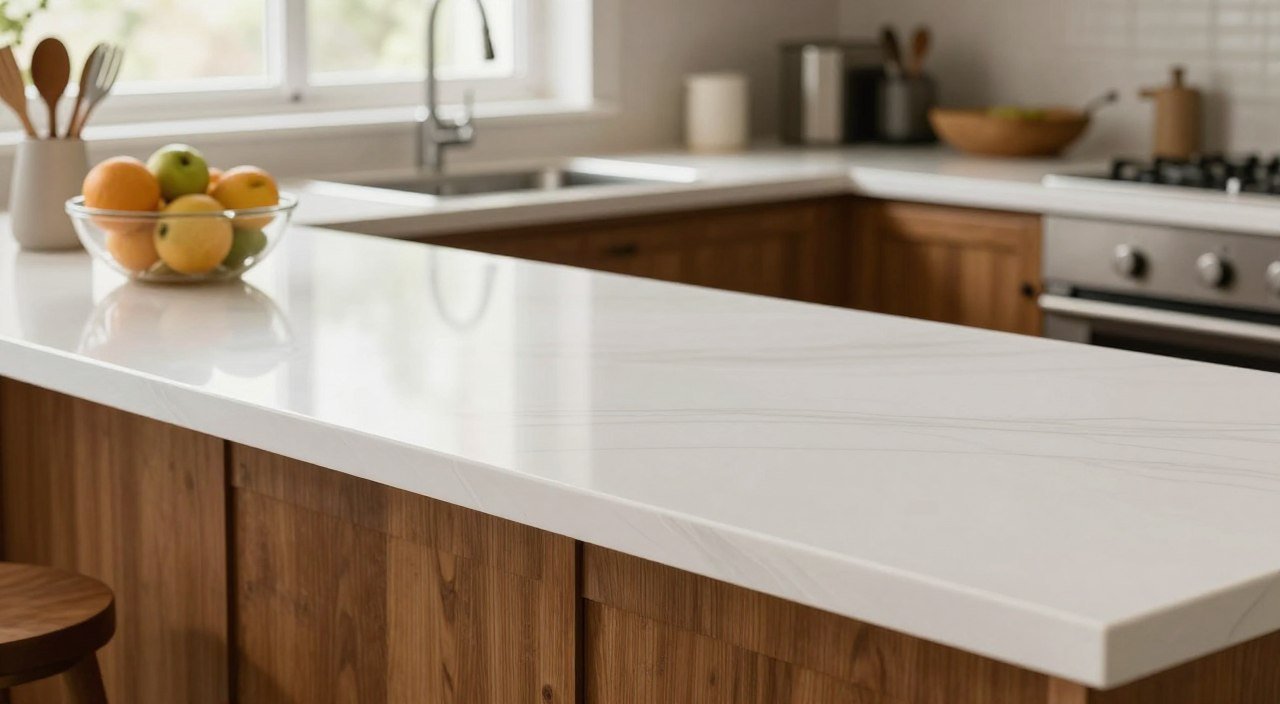
Modern kitchens often use materials that look great and last long. Homeowners choose engineered surfaces for their sleek look and function.
It’s key to know the porcelain countertop pros and cons before you decide. This material is both beautiful and strong, perfect for busy kitchens.
Choosing the right surface is important. We’ll help you decide if porcelain is right for your kitchen. It’s about finding a surface that’s both beautiful and durable.
Key Takeaways
- Engineered surfaces provide exceptional heat and scratch resistance for busy kitchens.
- The material is non-porous, making it highly resistant to stains and bacterial growth.
- You can choose from a wide variety of patterns that mimic natural stone or concrete.
- Installation requires professional expertise due to the fragile nature of the slabs.
- These surfaces offer a thinner profile, which creates a modern, minimalist aesthetic.
Understanding the Composition of Porcelain Countertops
Every porcelain slab has a story of heat, pressure, and minerals. These surfaces are not just pretty; they’re made to last in busy kitchens. They mix natural clays with minerals to be strong and look good.

How Porcelain Slabs Are Manufactured
The making starts with raw materials turned into powder. This powder is then pressed under immense pressure to shape. After shaping, it goes into a kiln for high heat.
The heat is over 2,000 degrees Fahrenheit. This heat makes the material dense and non-porous. It’s better than many stones at keeping out moisture and bacteria.
«The beauty of porcelain lies in its ability to mimic the elegance of natural stone while offering the structural integrity of a man-made marvel.»
Distinguishing Porcelain from Ceramic Surfaces
Porcelain and ceramic come from similar places but are not the same. Porcelain uses finer clay and is fired hotter. This makes porcelain denser and less likely to crack.
Ceramic is more porous and good for walls, not countertops. Porcelain, made with care, can handle kitchen use. It’s strong and stylish.
Analyzing Porcelain Countertop Benefits
Looking for the perfect kitchen surface? The porcelain countertop benefits are clear. It’s made with advanced tech and natural looks. It’s perfect for busy homes.

Exceptional Heat and Fire Resistance
Porcelain can handle very high temperatures. It’s fired at high heat during making. So, it stays cool even with hot pans or boiling water.
«Porcelain surfaces offer a level of thermal resilience that makes them ideal for high-performance kitchen environments where safety and durability are paramount.»
You can put a hot skillet on it without worry. This remarkable heat resistance makes cooking safer.
Non-Porous Nature and Hygiene Advantages
Keeping your kitchen clean is key for your family’s health. Porcelain doesn’t soak up liquids, oils, or food. It’s a non-porous material.
This makes it great for keeping things clean:
- Bacteria resistance: It’s hard for microbes to get in, making it easy to clean.
- Stain prevention: Spills like wine or coffee just wipe away.
- Low maintenance: No need for chemical sealants to protect it.
UV Stability for Indoor and Outdoor Applications
Need a material for an outdoor kitchen or bright indoor space? Porcelain won’t fade. It stays the same color and finish over time.
Unlike other materials, porcelain doesn’t yellow or break down in sunlight. It keeps looking great. Choosing porcelain means your home stays beautiful for years, showing off the porcelain countertop benefits.
Evaluating Porcelain Countertop Drawbacks
Porcelain is a top choice for modern kitchens. But, knowing the porcelain countertop drawbacks is key. Every premium surface has trade-offs. Knowing these helps keep your investment safe for years.

Risk of Chipping and Edge Vulnerability
Porcelain is very hard. But, this can be a problem. A heavy object, like a cast-iron skillet, can chip the edge of a slab.
Unlike natural stone, a chip in porcelain might show a different color underneath. This is because the pattern may not go all the way through the slab. Choose rounded or eased edges to lower this risk. Sharp edges are more likely to get damaged.
«The beauty of porcelain is undeniable, but homeowners must respect the physical limits of the material to avoid accidental damage in high-traffic zones.»
Complexity of Professional Installation
Installing these slabs is not easy. It needs special diamond-tipped blades and careful handling to avoid cracking.
This makes finding the right installers hard. You might find fewer local fabricators. This specialized labor can affect your project’s timeline and budget. Experienced installers charge more for their skills.
- Requires specialized cutting equipment.
- Demands expert handling to prevent structural stress.
- Limits the pool of available professional installers.
Limited Availability of Pattern-Through Designs
A big worry about porcelain countertop drawbacks is the slab edges’ look. Many porcelain products have a surface-level print. This means the pattern doesn’t go through the whole slab.
Choosing a mitered edge might show a seam if the pattern doesn’t match perfectly. While makers are getting better at «through-body» technology, these slabs are pricier and harder to find than standard ones.
Comparing Porcelain vs Quartz Countertops
Choosing the right kitchen surface is often a tough choice. You have to decide between porcelain vs quartz countertops. Both look great, but they act differently in a busy home. Knowing how they perform helps you pick the best one for your needs.

Durability and Scratch Resistance Differences
Porcelain is very hard because it’s fired at high temperatures. This makes it strong against scratches and abrasions. You can even use knives on it, but a cutting board is still a good idea.
Quartz is made of crushed minerals and resin. It’s durable, but the resin can make it more prone to heat damage and deep scratches. If you need a surface that can handle extreme heat, porcelain might be better.
Maintenance Requirements for Daily Use
Keeping your countertops clean is important. Porcelain is non-porous, so it doesn’t need sealing and resists stains well. Just use mild soap and water to clean it.
Quartz is also non-porous, but it needs more care with heat and harsh chemicals. Always use trivets for hot pans. Porcelain is a bit easier to maintain, making it great for those who cook a lot.
Comparing Porcelain vs Granite Countertops
When picking for your kitchen, porcelain vs granite countertops is a big choice. Granite feels classic and organic. Porcelain is modern and engineered. Knowing these differences helps pick the right surface for you.
Natural Stone Porosity Versus Porcelain Density
Granite is natural and porous. It needs periodic sealing to stop stains. Without sealing, granite can stain from oils and acids.
Porcelain is made and very dense. It’s naturally non-porous. This means no sealing is needed. Porcelain is better for those who want easy care and a clean surface.
Aesthetic Variety and Veining Consistency
Granite has unique patterns because each slab is different. You might love its authentic character. But matching seams or finding consistent veining can be hard.
Porcelain uses advanced tech to look like natural stone. It offers a highly consistent aesthetic. This tech makes patterns that are hard to find in nature, giving you design control.
Assessing Porcelain Countertop Durability in High-Traffic Kitchens
A busy kitchen tests your countertops every day. The porcelain countertop durability is key to your happiness. You want a surface that stays useful and looks good, even when it’s busy.
Impact Resistance and Structural Integrity
Porcelain is made in a special way that makes it very strong. This process gives it exceptional structural integrity. It can handle heavy pots and pans, and even drops.
While nothing is perfect, porcelain does well in busy kitchens.
«The true measure of a kitchen surface is not how it looks on day one, but how it performs after years of intense daily use.»
Let’s look at how porcelain compares to other materials:
| Feature | Porcelain | Granite |
|---|---|---|
| Impact Resistance | High | Moderate |
| Scratch Resistance | Excellent | Good |
| Heat Tolerance | Superior | High |
Stain Resistance Against Common Kitchen Acids
Porcelain’s big plus is its non-porous surface. It doesn’t soak up liquids, so you don’t have to worry about stains from things like lemon juice or red wine. This means your countertops stay clean and new, even after spills.
Working with acidic foods is safe with porcelain. You don’t have to worry about stains or etching like you might with stone. Cleaning up spills is easy with just a damp cloth. Choosing porcelain countertop durability means you’re picking a surface that’s easy to care for and protects your kitchen.
Navigating Porcelain Countertop Cost Factors
Getting to know the cost of porcelain means looking at both the material and the work needed. These surfaces are very durable. But, the porcelain countertop cost changes based on different things. You should think about these before you start your project.
Material Pricing and Slab Thickness Variations
The slab’s thickness is a big part of your budget. Thinner porcelain is used for walls and backsplashes and is less expensive. But, thicker slabs are needed for kitchen counters.
Experts say 12mm or 20mm slabs are best for kitchen islands and workspaces. This is because they are strong. Also, big, beautiful slabs with cool designs cost more. This is because making them is hard.
Labor Costs Associated with Specialized Fabrication
The porcelain countertop cost also depends on the work needed to install it. Porcelain is hard and can break easily. So, it’s hard to cut without special tools.
Fabricators use special water jets and diamond blades to shape it without breaking. This work needs advanced technical skills and special machines. So, you’ll pay more for professional installation than for other countertops.
Choosing an experienced installer is essential. They make sure your edges and seams look great. Even though the labor costs seem high, they help your countertop last longer.
Essential Porcelain Countertop Maintenance Tips
Keeping your kitchen clean is easy with the right care. Porcelain countertops are tough, but they need regular porcelain countertop maintenance. This keeps them looking new and strong.
Daily Cleaning Routines for Surface Longevity
You don’t need harsh chemicals to clean your kitchen. Warm water and mild dish soap work great.
Use a soft cloth or sponge to clean. Always dry the area well to avoid water spots.
Handling Stubborn Stains and Spills
Accidents can happen in a busy kitchen. If you spill something, clean it up fast.
For tough stains, use a gentle cleaner made for stone or porcelain. Don’t use steel wool or scouring pads, as they can scratch and dull your counters.
Preventative Measures to Avoid Surface Damage
Protecting your countertops is key. Even though porcelain can handle heat, using a trivet is a smart habit.
Always use a cutting board when cutting food. This protects your knives and the countertop from scratches. Being careful around the edges helps your counters last longer.
Remember, consistency is key for long-term care. By following these tips, your kitchen will stay beautiful and useful for years.
Planning Your Porcelain Countertop Installation
A good start is before the first slab comes to your home. Porcelain needs a special way to be installed. It’s different from natural stone or quartz.
Selecting the Right Fabricator for Your Project
Not all stone experts can work with thin, big porcelain slabs. Look for someone with proven experience in this area.
Check if they have the right tools, like water-jet cutters and special diamond blades. Wrong tools can cause cracks or rough edges.
Preparing Your Cabinetry for Heavy Slabs
Porcelain is lighter than granite but still needs a solid base. Your cabinets must be strong and level before starting.
Here’s what to do for your cabinets:
- Make sure all base cabinets are level.
- Add extra support or plywood for big overhangs.
- Check that cabinets are well-attached to wall studs.
Understanding Seam Placement and Visibility
Even with big slabs, seams are sometimes needed. Talk about seam placement early to set your expectations.
A good installer will use color-matched epoxy for seams. This makes them discreet as possible. Talk to your installer about the slab layout to keep patterns smooth.
Determining if Porcelain is Right for Your Lifestyle
Choosing porcelain for your kitchen is about matching your cooking style and future plans. Kitchens are for different things, like making coffee or cooking big meals. Knowing how you use your countertop is key to a good kitchen makeover.
Matching Surface Performance to Cooking Habits
If you love to cook and try new things, you need a strong surface. Porcelain is exceptionally heat-resistant. This means you can put hot pans right on it without worrying about damage.
For those who like a clean kitchen, porcelain is great. It doesn’t let spills like wine or lemon juice get in. Think about these points when deciding:
- Frequency of use: Is your kitchen busy every day or just sometimes?
- Cleaning preferences: Do you want a surface that’s easy to clean?
- Entertaining style: Do you have big parties where things get messy?
Considering Long-Term Resale Value
Choosing a countertop is a big deal for your home’s value. Buyers want surfaces that look good and last. Porcelain is sleek and modern, fitting many tastes.
Porcelain doesn’t scratch or fade, so it stays beautiful for years. This is a strong selling point for buyers who want a kitchen that looks new. A durable surface protects your investment and makes your home more attractive.
The Porcelain Countertop Pros and Cons Summary
Looking at the porcelain countertop pros and cons will help you feel sure about your kitchen upgrade. It helps you see if this material fits your daily life and style.
Quick Reference Guide for Decision Making
This table shows key things to think about. It helps make sure your choice will make you happy for a long time.
| Feature | Advantage | Potential Drawback |
|---|---|---|
| Durability | High heat and scratch resistance | Vulnerable to edge chipping |
| Maintenance | Non-porous and easy to clean | Requires professional installation |
| Aesthetics | UV stable and consistent patterns | Limited pattern-through options |
When you look at these porcelain countertop pros and cons, think about what’s important to you. If you want something easy to clean and heat-proof, the good points might be worth the setup trouble.
Choosing the right surface is about finding what fits your needs. Now, you’re ready to start your renovation with total clarity.
Conclusion
Choosing the right surface for your home is important. It should look good and work well every day. Porcelain countertops are strong and stylish, perfect for busy homes.
You now know how these countertops hold up. Think about your cooking and cleaning needs. This will help you plan your renovation.
Brands like Dekton or Lapitec offer top-notch options. They are great for a modern kitchen. Your choice will affect your kitchen’s value and use for years.
Visit a local showroom to see these materials. Touching them and seeing them in natural light helps. It makes sure your vision matches the real thing.
Getting professional help makes your kitchen beautiful for a long time. Use this guide to plan your project with confidence.
FAQ
What are the primary porcelain countertop pros and cons you should consider before a remodel?
Porcelain countertops are great because they can handle extreme heat and are non-porous. But, they can chip easily and need special installation. This is because they are thin and rigid.
How does porcelain countertop durability compare to other natural stones?
Porcelain is very durable. It’s fired at over 2,500 degrees Fahrenheit. This makes it hard and resistant to scratches and chemicals.Unlike natural stones, porcelain won’t crack or dull in busy kitchens. Brands like SapienStone make it perfect for high-traffic areas.
What are the main differences when comparing porcelain vs quartz countertops?
Porcelain can handle heat better than quartz. Quartz can melt or change color under hot pans. Porcelain is also UV-stable, great for outdoor use.Quartz may fade in sunlight. Porcelain keeps its color and pattern well.
Why is porcelain countertop installation considered more complex than other materials?
Installing porcelain is tricky. Slabs are thin and can break easily. You need special tools and a pro like Daltile to do it right.They must be supported well to avoid damage. This makes the process more complex.
What factors influence the total porcelain countertop cost?
The cost of porcelain countertops depends on several things. The thickness of the slab and the edge design matter. So does the special labor needed.While the material is affordable, the cost to cut and polish it is higher. This is because of its high-definition surface.
Is porcelain vs granite countertops a better choice for low-maintenance kitchens?
Porcelain is better for low-maintenance kitchens. Granite needs sealing to prevent stains. Porcelain doesn’t need sealing and is easier to clean.It’s also more hygienic, resisting bacteria and food acids without chemicals.
What does routine porcelain countertop maintenance involve?
Maintaining porcelain countertops is easy. Just use warm water and mild detergent for daily cleaning. For tough stains, you can use stronger cleaners.Use cutting boards to avoid metal marks from knives. Also, avoid dropping heavy items on the edges.
Can I use porcelain slabs for an outdoor kitchen application?
Yes, porcelain slabs are great for outdoor kitchens. They don’t fade in sunlight. They also handle water well, making them perfect for grilling and dining outside.
Are there any limitations to the patterns available on porcelain surfaces?
Porcelain can look like many things, like Calacatta marble or metal. But, most slabs have «printed» designs. This means the pattern might not go through the whole slab.But, some premium brands now offer «through-body» veining. This ensures the pattern shows up even if the edge is damaged.