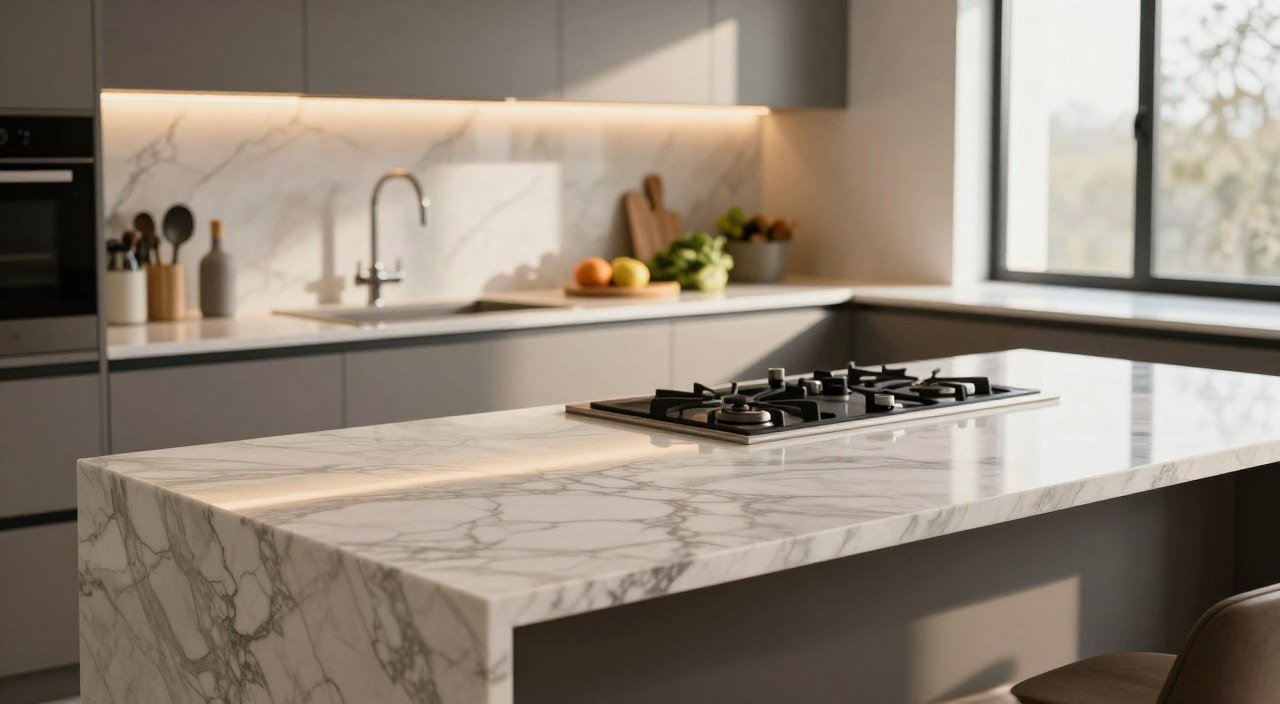
Your kitchen is the heart of your home. But it gets stressed every day. Putting a hot pan on a surface can cause cracks or scorch marks.
Using high-quality materials is the best way to protect your kitchen. It keeps it safe from heat damage.
Choosing the right heat resistant countertops saves you money. It keeps your kitchen looking new for years. This guide shows you the most durable options for homeowners.
These surfaces are built to last. They keep your home looking good and give you peace of mind. Let us guide you to the best choices for a resilient and stylish kitchen.
Understanding Heat Damage in Kitchen Environments
Thermal stress is a big problem for your kitchen. Many people focus on looks, but heat resistant countertops are key for lasting quality. Knowing how your surfaces handle heat is crucial to avoid damage.

The Science of Thermal Shock in Countertop Materials
Thermal shock happens when a material’s temperature changes fast. Putting a hot pan on a cold surface causes it to expand too quickly. This creates internal tension that can crack the material.
Good heat resistant surface solutions are made to handle these changes. They are made to expand evenly, so they don’t crack.
«The integrity of a kitchen surface is not just about hardness; it is about the ability to dissipate energy before it becomes a structural flaw.»
Common Kitchen Habits That Compromise Surface Integrity
Even tough materials can get damaged if you don’t follow safety rules. Many people unknowingly harm their counters with bad habits. Here are some common mistakes:
- Placing hot cast iron skillets directly on the counter without a protective barrier.
- Leaving hot appliances, such as slow cookers, running for extended periods on sensitive stone.
- Exposing cold surfaces to sudden steam or boiling water spills.
Changing your habits is as important as picking the right heat resistant surface solutions. Using trivets and heat pads helps a lot. Getting heat resistant countertops is smart, but taking care of them daily is even more important.
Evaluating Top Heat Resistant Countertops Materials
Choosing the best heat resistant materials means thinking about how you cook and how long the countertop will last. Your kitchen countertop is where you do most of your cooking. It needs to handle heat well.
Natural Stone Options Like Granite and Soapstone
Natural stone is popular for its beauty and strength. Granite is dense and can handle a lot of heat. But, it’s best to use a trivet to protect the sealant.
Soapstone is non-porous and absorbs heat well. It’s used in labs because it doesn’t burn. These heat resistant countertops look great and last a long time.

Engineered Solutions Including Sintered Stone and Porcelain
New heat resistant countertop materials are made with modern tech. Sintered stone is made under high pressure and heat. It’s perfect for busy kitchens.
Porcelain slabs are also great for performance. They’re fired at high temperatures. This makes them strong against heat and daily use.
Metal Surfaces for Industrial Kitchen Aesthetics
Stainless steel is great for an industrial look. Metal surfaces don’t crack or scorch. They’re perfect for professional kitchens.
Using these heat resistant countertops makes your kitchen look good and work well. Whether you like stone or slabs, they keep your kitchen ready for years.
Step-by-Step Guide to Selecting the Right Surface
Choosing the right countertop is important. Look at how you use your kitchen every day. This helps find the durable kitchen surfaces that last long.

Assessing Your Cooking Frequency and Heat Exposure
Track how often you use your stovetop and oven. If you cook a lot or use high heat, you need strong materials. Frequent exposure to hot pots and pans means your surface should not crack or change color.
Think about the cookware you use most. Cast iron and heavy Dutch ovens hold heat a lot. Knowing this helps pick the best heat resistant materials for you.
Balancing Aesthetic Preferences with Thermal Durability
It’s natural to want a kitchen that looks great. But don’t forget about performance. Many modern materials look like natural stone but are better at handling heat.
Consider your home’s style. Whether you like a sleek look or something warm, there are heat resistant countertop choices for you. Choosing materials that look good and handle heat well is key.
Budgeting for Long-Term Heat Resistance
Some materials cost more upfront but save money later. A heat-resistant surface means no expensive repairs or early replacements. Here’s a table to help you compare costs and needs.
| Material Type | Heat Resistance | Maintenance Level | Relative Cost |
|---|---|---|---|
| Sintered Stone | Excellent | Low | High |
| Granite | High | Moderate | Medium |
| Porcelain | Excellent | Low | High |
| Soapstone | Very High | Moderate | Medium |
Your budget should show the value of a stress-free kitchen. Picking the right material means your kitchen stays safe and reliable for all meals.
Installation Best Practices for Heat Protection
Protecting your kitchen starts before you use it. Choosing good materials is key. But how they’re installed matters a lot.
Professional installers make sure your durable kitchen surfaces last. They keep them strong against daily use.

Ensuring Proper Substrate Support for Heavy Materials
Big slabs like granite need a strong base. If the base is uneven, the slab might crack. Proper weight distribution stops cracks near sinks or cooktops.
«A countertop is only as reliable as the foundation beneath it; precision in the substrate prevents the hidden stresses that lead to thermal failure.»
Sealing and Finishing Techniques to Enhance Resilience
Choosing the right sealant is crucial. It keeps your heat resistant countertop choices safe from heat. Here are key steps to keep your counter strong:
- Deep Penetrating Sealers: They block moisture and heat.
- Polished Finishes: Easy to clean and less stained.
- Edge Profiling: Rounded edges are less likely to chip.
Managing Expansion Gaps Near Cooktops
Materials expand and contract with heat. If they’re too tight, they might buckle. Always leave a small gap for all durable kitchen surfaces.
| Material Type | Expansion Needs | Installation Priority |
|---|---|---|
| Sintered Stone | Minimal | High Precision |
| Natural Granite | Moderate | Level Support |
| Porcelain | Low | Edge Clearance |
Follow these tips to keep your heat resistant countertop choices looking great. Always get a certified installer to check if your material fits your kitchen.
Daily Maintenance Routines to Preserve Your Counters
Keeping your counters in top shape is important. By cleaning and caring for them right, they stay beautiful and useful for years. If you ignore them, they can get damaged and not work well with heat.
Cleaning Protocols for High-Heat Surfaces
Don’t use harsh chemicals on your counters. They can harm the protective layer. Instead, use warm water and a little dish soap. Avoid rough scrubbers to prevent scratches.
Quickly clean up spills, like lemon juice or vinegar. These can damage your counters, even if they’re heatproof. Use a soft microfiber cloth to clean every day and keep them looking great.
Preventative Sealing Schedules for Natural Stone
Natural stone needs extra care to stay heat-resistant. Stones like granite or soapstone need sealant to keep liquids out. If moisture gets in, it can cause problems when the stone gets hot or cold fast.
Check your sealant every six months with a water test. Put a little water on the stone. If it beads up, it’s working. But if it soaks in and darkens the stone, it’s time for a new sealant.
Being consistent is key to keeping your counters safe. By following a structured maintenance schedule, you avoid big problems later. Taking care of your counters now saves you money and hassle later.
Handling Accidental Heat Exposure and Repairs
Even the strongest heat resistant countertop materials can get damaged by sudden heat. These surfaces are made to last, but they can still get stressed by high temperatures. Spotting problems early helps fix them before they get worse.
Identifying Signs of Thermal Stress and Cracking
Look for small changes in how the surface looks. You might see hairline cracks from where something hot was placed. These cracks happen when the material grows too fast and can’t handle it.
Another sign is when the surface looks dull or has changed color. This means the resin or sealant has been damaged. If you see this on your heatproof counters, stop using that spot right away to avoid more damage.
Professional Repair Methods for Scorched Surfaces
Deciding to fix it yourself depends on how bad the damage is. Small marks or color changes might be fixed with special polish. But big cracks or serious burns need a pro.
Trying to fix big cracks yourself can make things worse. Professional repair services use the right materials and tools to fix your surface. If unsure, ask the maker of your heat resistant countertop materials for a trusted repair expert near you.
Comparing Leading Heat Resistant Countertop Brands
When you renovate your kitchen, picking the right countertop is key. You want something that lasts long and can handle heat. Many people look for materials that are both beautiful and can handle high heat.
By looking at the top heat resistant brands, you can find a surface that meets your needs. This is important for a busy kitchen where things can get hot.
Dekton by Cosentino Sintered Stone Performance
Dekton uses special Particle Sintering Technology. This makes it very strong and resistant to heat, scratches, and stains. It won’t burn or scorch, even when hot cookware is placed directly on it.
Lapitec Full-Bodied Porcelain Slab Features
Lapitec is special because it’s a full-bodied porcelain. This means the color and pattern go all the way through the slab. It’s made without resins, so it stays stable even when it gets very hot.
Neolith High-Performance Sintered Surfaces
Neolith is known for its high-performance sintered surfaces. These slabs are strong and can handle high temperatures. They won’t warp or crack, even when hot items are placed on them.
| Brand | Primary Material | Key Benefit |
|---|---|---|
| Dekton | Sintered Stone | Extreme Thermal Stability |
| Lapitec | Full-Bodied Porcelain | Resin-Free Composition |
| Neolith | Sintered Stone | High Impact Resistance |
Choosing between these top rated countertop options depends on what you like and what’s available. Each brand offers different looks and feels. These premium materials give you peace of mind while cooking.
Safety Protocols for Hot Cookware and Appliances
Even the strongest kitchen surfaces need careful handling. You might have picked top rated countertop options. But, constant heat can still damage them. To keep your kitchen looking good for years, follow some simple steps.
Utilizing Trivets and Heat Pads Effectively
Putting hot items on a high-quality trivet or heat-resistant pad is key. This stops hot pots and pans from harming your counters. It’s a simple way to avoid damage.
Use silicone, cork, or wood pads for best results. Make sure the pad fits your cookware well. This keeps your counters safe from heat damage.
Managing Airflow Around Countertop-Integrated Appliances
Kitchens with built-in appliances need special care. Things like induction cooktops or warming drawers get very hot. Make sure they’re installed right, following the clearance requirements.
Keep the spaces around these appliances clean. This lets air move and prevents heat buildup. Regular checks help your appliances work well and your counters stay safe.
Conclusion
Choosing the right surface for your home is important. It needs to look good and last long. You now know how to pick materials like Dekton or Neolith for your kitchen.
High-performance surfaces keep your kitchen working well for years. Taking good care and being safe helps your countertop last longer.
Your kitchen is the heart of your home. Quality materials make meal prep worry-free. You’ll have a kitchen that’s both beautiful and strong.
FAQ
What are the best heat resistant materials for a high-traffic kitchen?
Natural stones like granite and soapstone are great for kitchens. They come from volcanoes. Engineered stones like Dekton by Cosentino and Neolith are also good. They protect well against heat.
How does thermal shock damage even the most heat resistant countertops?
Thermal shock happens when a cold surface gets very hot fast. This can cause cracks. To avoid this, use trivets or heat pads with your counters.
Are there specific heat resistant countertop materials that require less maintenance?
Yes, sintered stone and porcelain need less care than natural stone. Granite needs sealing to stay strong. Dekton doesn’t need sealing, making it easy to keep clean.
What should I look for when comparing top heat resistant brands for a renovation?
Look at how the material is made and its heat rating. Dekton is made in a special way to resist heat and UV rays. Lapitec and Neolith also offer durable, stylish options.
How do expansion gaps protect heat resistant countertops during installation?
Installers put small gaps near cooktops and walls. These gaps let the material move with heat changes. Without them, the material could buckle or crack.
Can scorched or heat-damaged countertops be repaired?
It depends on the material. Some damage can be fixed by a pro. But, big damage might need a new section.
Why is substrate support critical for heavy, heat resistant countertop choices?
Heavy materials need a strong base. This keeps the slab from bending under its own weight. A solid base is key to keeping your countertop safe.
Do integrated kitchen appliances affect the performance of heat resistant surface solutions?
Yes, appliances like cooktops or ovens can heat up the countertop. Make sure there’s good airflow and insulation. This helps keep the countertop cool and safe.