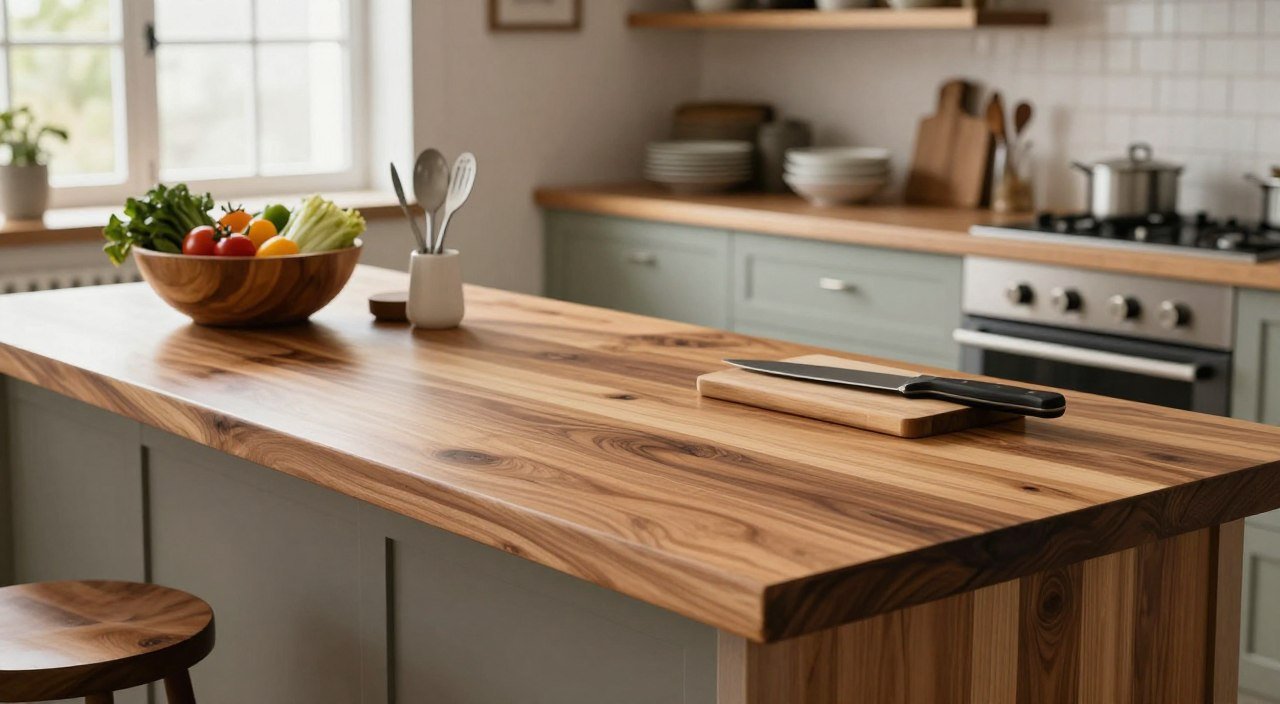
Starting your dream kitchen begins with the right base. Solid wood kitchen worktops add warmth to any room. They mix rustic charm with modern use.

Choosing high-quality wooden work surfaces keeps your kitchen looking good and working well. Care and the right choice keep it looking new. Follow expert tips to keep it beautiful.
This guide helps you pick the best wood and finish for your kitchen. Learn how these beautiful surfaces can make your home welcoming. Let’s see how they can change your kitchen into a truly inviting space.
Understanding the appeal of solid wood kitchen worktops
Installing a wooden countertop in your kitchen is very charming. People love these surfaces because they feel warm and inviting. Each piece of wood has its own story, with unique patterns and colors.
As wood ages, it gets even more beautiful. It develops a patina that makes it look better over time. Choosing solid wood kitchen worktops adds style and character to your kitchen.
Benefits of choosing natural timber
Choosing natural wood kitchen tops is great for many reasons. Wood feels nice to touch, which is perfect for busy kitchens. It’s also good for the environment.
- Sustainability: Wood is a renewable resource that’s better for the planet.
- Repairability: Small damages can be fixed easily, making wood last longer.
- Versatility: Wood fits well with both modern and traditional kitchen styles.
Comparing hardwood versus softwood options
When picking a wood surface, it’s important to know the difference between hardwood and softwood. Hardwoods, like oak or walnut, are strong and last long. Softwoods, from coniferous trees, need more care to avoid damage.
Here’s a table to help you choose the right wood for your kitchen:
| Feature | Hardwood | Softwood |
|---|---|---|
| Durability | High resistance to impact | Prone to dents and scratches |
| Maintenance | Requires periodic oiling | Needs frequent sealing |
| Longevity | Lasts for decades | Shorter lifespan |
| Cost | Premium investment | Budget-friendly |
Selecting the right timber for your kitchen
Finding the perfect timber for your kitchen is a journey. It’s about looks and how it works every day. The wood you pick affects how it looks over time, handles water, and needs care.
Knowing what different hardwoods are like helps. This way, your solid wood kitchen worktops will be a highlight for years.

Characteristics of Oak and Walnut
Oak is known for being strong and durable. Its grain pattern hides small scratches well. It’s great for busy kitchens because it looks timeless and rustic.
Walnut adds a luxurious, dark look to any room. It’s a bit softer than Oak but still loved for premium solid wood counters. It’s perfect for those who want elegance and a fancy finish.
Performance of Maple and Cherry
Maple is very hard, so it resists dents and impacts well. Its light color makes kitchens look clean and bright. It’s also easy to keep clean because of its tight grain.
Cherry wood turns reddish-brown and gets even more beautiful with age. It’s strong but easy to work with. Choosing solid timber worktops from Cherry means your kitchen will get more interesting over time.
Sustainability considerations for premium solid wood counters
Choosing the right material is about more than looks. It’s also about being kind to the planet. Look for timber from well-managed forests.
Certifications like the FSC (Forest Stewardship Council) help. They mean your wood comes from places that care about nature and people. By choosing sustainable wood, your kitchen stays beautiful and eco-friendly. Always ask where your wood comes from to make a good choice.
Measuring and planning your bespoke kitchen work surfaces
Getting a pro look in your kitchen starts before you saw anything. It’s all about precision for perfect fit. Measuring your space well saves you from mistakes and gives a smooth finish.

Accurate templating techniques
To fit your wooden countertop just right, make a real-life template. Use thin hardboard or cardboard to match your cabinets. This helps with uneven walls.
Put the template on your cabinets to check the fit. If it’s off, trim it until it fits perfectly. This careful step makes your solid timber worktops fit right away.
Accounting for expansion gaps
Wood changes with humidity and temperature. So, you need gaps for it to move. These gaps keep your wood from buckling or cracking.
Leave about 3 to 5 millimeters of gap. You can cover these later with a backsplash or trim. Proper planning keeps your kitchen stable for a long time.
Planning for sink and appliance cutouts
Mark where your sink and hob will go on your template. Check these spots against your appliance specs. It’s easier to change a template than a cut solid timber worktops.
Make sure the sink area is strong. If you have a heavy sink, check if your cabinet can hold it. Good planning makes your wooden countertop look great and work well for years.
Preparing your cabinets for installation
Getting ready for solid timber worktops starts before the wood gets to your house. Your kitchen cabinets are key for your new high-quality wooden work surfaces. Make sure they are ready to avoid problems later.

Ensuring a level base
Wood doesn’t like uneven surfaces. It can bow or crack. Use a spirit level to check if each cabinet top is flat. If not, use shims to fix it.
When installing bespoke kitchen work surfaces, keep things even. A small slope can harm the wood. Make sure your base units are stable and connected.
Reinforcing cabinet structures for heavy timber
Solid wood is much heavier than other materials. Your cabinets might need extra support. Check the top rails to see if they can handle the weight of solid timber worktops.
Adding support keeps your high-quality wooden work surfaces stable. A strong frame stops the wood from sagging. Use the table below to see if you need more support.
| Cabinet Material | Support Requirement | Recommended Action |
|---|---|---|
| Standard Particleboard | Moderate | Add corner gussets |
| Plywood Construction | Low | Check wall fixings |
| Solid Wood Frame | Minimal | Verify level alignment |
| Open-Shelf Units | High | Install steel brackets |
By preparing your cabinets well, you make a strong base for your bespoke kitchen work surfaces. This ensures your investment looks great and works well for years.
Cutting and fitting your durable wood worktops
Learning to cut and fit wood surfaces is key for a lasting home look. When you choose bespoke kitchen work surfaces, how you install them matters a lot. Take your time to avoid mistakes and get a smooth finish.
Essential tools for precision cutting
You need top-notch tools for pro-looking cuts. A circular saw with a fine blade is best for smooth cuts. Use a straight-edge guide to keep your cuts straight.
- High-quality circular saw with a sharp blade
- Clamping guide rails for stability
- Router for finishing edges and sink cutouts
- Measuring tape and a carpenter’s square

Executing clean crosscuts and rip cuts
Put masking tape on the cut line to avoid chipping. This keeps the wood fibers together. Always support the off-cut to stop it from breaking.
«Quality is never an accident; it is always the result of high intention, sincere effort, intelligent direction and skillful execution.»
Securing the worktop to the base units
After cutting, attach the wood to your cabinets. Use strong screws that don’t go through the wood. Always pre-drill your holes to avoid splitting.
Using slotted brackets for movement
Wood changes size with humidity. Use slotted brackets to let it move without damage. This keeps your durable wood worktops looking good for years.
Applying protective finishes for longevity
Protecting your timber investment is key. Sealing it keeps moisture out. This is crucial for durable wood worktops in kitchens.
Choosing between oils and lacquers
Decide between oils and lacquers for your finish. Oils go deep into the wood. They give a tactile, matte finish that’s easy to fix if scratched.
Lacquers, on the other hand, form a hard film. This film fights spills and heat well. It’s great for premium solid wood counters used a lot.
| Feature | Hardwax Oil | Polyurethane Lacquer |
|---|---|---|
| Finish Look | Natural/Matte | Satin/Gloss |
| Maintenance | Easy spot repair | Requires full refinish |
| Durability | Moderate | High |
| Application | Simple wipe-on | Requires brush/spray |
Step by step application process
Start with a clean, dry surface. Use a cloth to apply the finish in the wood grain direction. This ensures even coverage.
Let the first coat dry fully. Don’t rush it. Trapped moisture can damage the wood or cause uneven color.
Sanding between coats for a smooth finish
To get a smooth finish, sand lightly between coats. Use 320-grit sandpaper to smooth out the wood.
Wipe away dust with a tack cloth before the next layer. This meticulous process keeps your premium solid wood counters smooth and protected.
Daily care and maintenance routines
Keeping your hardwood countertops shiny is easy. Just spend a few minutes each day on them. This keeps them looking great in your home. Regular care stops damage and keeps the wood bright.
Cleaning practices to avoid water damage
Water harms wooden countertops. Clean them with a soft, damp cloth every day. Don’t soak the wood or use harsh cleaners that can harm the finish.
After cleaning, dry the surface with a clean, dry cloth. Never leave wet sponges or damp towels on the wood. This can cause water rings or warping.
Re-oiling schedules for customized hardwood countertops
Your natural wood kitchen tops need oil to stay healthy. Re-oil them every three to six months, depending on use. If they look dull or feel dry, it’s time for oil.
Use a good food-safe oil to protect them. Apply a thin layer with a cloth, let it soak, and buff off extra. This keeps your customized hardwood countertops looking good for years.
Handling spills and stains immediately
Accidents can happen, but act fast. Blot spills like wine or juice right away with a paper towel. Don’t rub the spill, as it can go deeper into the wood.
For tough stains, use mild soap and clean the area. Then, dry it well. Quick action prevents stains on your natural wood kitchen tops. Being proactive keeps your wooden countertop in great shape.
Troubleshooting common issues with natural wood kitchen tops
Natural wood surfaces are beautiful, but they need extra care. Even with careful daily habits, your durable wood worktops may show wear. Most minor blemishes are easy to fix with the right tools and patience.
Repairing scratches and dents
Surface scratches are common in busy kitchens. For light scratches, buff the area with fine-grit sandpaper. Move in the wood grain direction. Then, apply a fresh coat of oil to blend the spot.
Dents can be tough, but moisture helps. Place a damp cloth over the dent and warm it with an iron. The steam makes the wood fibers swell, lifting the dent.
Addressing warping or cupping
Warping or cupping happens with big changes in humidity or temperature. If your premium solid wood counters lift, check the underside for airflow. Make sure cabinets are level to prevent these issues.
Minor cupping might be fixed by adjusting hardware or adding support brackets. For severe movement, get a professional’s help. Keep your home’s humidity steady to avoid these problems.
Removing stubborn water marks
Water marks show as white spots on natural wood kitchen tops. These spots mean moisture is trapped in the finish. Rub the area gently with a mild abrasive and oil mix.
If the stain doesn’t go away, sand lightly and apply oil again. Make sure the area is dry before applying any products. This keeps your surfaces looking new.
| Issue | Primary Cause | Quick Fix |
|---|---|---|
| Surface Scratches | Daily wear | Light sanding and oiling |
| Deep Dents | Heavy impact | Steam and heat treatment |
| Water Stains | Standing moisture | Buffing with oil |
| Cupping | Humidity changes | Adjusting support brackets |
Maintaining your customized hardwood countertops is rewarding. Fixing minor issues early protects your investment and keeps your kitchen looking great. Regular care is key to long-lasting beauty and function.
Conclusion
Choosing high-quality wooden work surfaces adds warmth and character to your home. Synthetic materials can’t match this. Natural timber gets better with age, showing off your cooking stories.
You know how to pick, install, and care for your wooden surfaces. Planning and upkeep are key for a beautiful kitchen. These steps keep your kitchen looking great and working well.
Choosing customized hardwood countertops shows you value both style and durability. Look at Boos Block or Lumber Liquidators for top materials. Quality materials and skill make your kitchen a family gathering spot for years.
Be proud of your home renovation work. Every detail, like sanded edges and oiled surfaces, makes your kitchen look professional. Watch as your kitchen becomes the dream space you always wanted.
FAQ
Why should I choose solid wood kitchen worktops over synthetic materials?
Solid wood kitchen worktops add warmth and beauty to your home. They can’t be matched by laminate or quartz. Wood is also antibacterial and can be fixed if damaged.
What is the main difference between hardwood and softwood for a wooden countertop?
Hardwoods like Oak and Maple are durable and less likely to get damaged. Softwoods, like Pine, are softer and more prone to dents. Hardwood is better for a long-lasting countertop.
How do I ensure my bespoke kitchen work surfaces are sustainably sourced?
Look for timber with Forest Stewardship Council (FSC) or PEFC certification. These ensure your wood is from responsibly managed forests.
Why is it necessary to include expansion gaps when installing solid timber worktops?
Wood expands and contracts with humidity and temperature changes. Expansion gaps prevent the wood from warping or cracking. This keeps your countertops looking good.
How should I prepare my cabinets to support premium solid wood counters?
Make sure your cabinets are level and sturdy. Use a spirit level and reinforce them if needed. This supports the weight of the wood tops.
What are the best tools for cutting durable wood worktops for sinks and appliances?
Use tools like a Festool plunge saw or a heavy-duty router for clean cuts. Always use sharp blades to avoid splintering the wood.
Should I finish my natural wood kitchen tops with oil or lacquer?
Oils like Osmo TopOil protect the wood and are easy to repair. Lacquers are harder but harder to fix if damaged. Choose based on your needs.
How often do I need to re-oil my customized hardwood countertops?
Re-oil every three to six months to keep them water-resistant. The «water droplet test» can help you know when it’s time.
How can I repair scratches or water marks on my solid wood kitchen worktops?
Sand minor scratches and reapply finish. For water marks, sand deeper. Use steam to fix dents before refinishing.
Can I install a undermount sink with bespoke kitchen work surfaces?
Yes, but it needs expert precision. Sand and seal the edges well to prevent water damage. Make sure to route drainage grooves correctly.