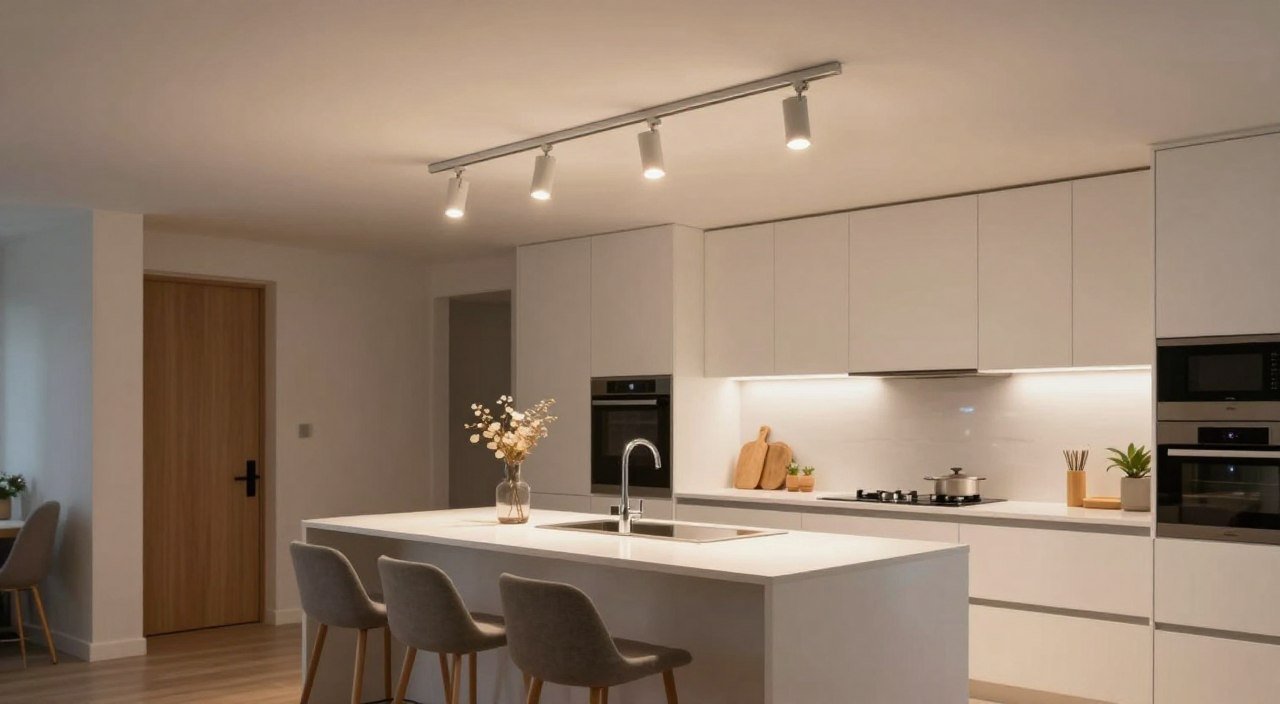
Designing a narrow kitchen is like solving a puzzle. You aim to use every inch wisely. The right track lighting ideas for galley kitchen remodels can change your home.
Putting lights in the right spots gets rid of dark spots. Choosing the right lights makes your counters and cabinets shine. This makes your kitchen both highly functional and beautiful.
Our guide shows how to pick the best lighting for your home. We share expert tips for a stylish kitchen. Follow these steps for a modern kitchen that lasts.
Key Takeaways
- Strategic illumination makes narrow spaces feel significantly larger.
- Adjustable heads allow you to direct focus toward specific work zones.
- Layering light sources improves both safety and overall ambiance.
- Modern fixtures offer a sleek aesthetic that complements narrow layouts.
- Proper installation ensures your main_keyword delivers maximum efficiency.
Assessing your galley kitchen layout for optimal lighting
Getting the right galley kitchen lighting design starts with checking your kitchen’s layout. Before buying lights, know how your kitchen’s shape affects light. Mapping your space helps make it both useful and nice to look at.

Identifying shadow zones in narrow corridors
Narrow kitchens often have shadows from upper cabinets. These shadows make it hard to work on counters. Watch where your shadow falls while cooking or washing dishes.
Finding these dark spots is key for good small kitchen lighting ideas. By knowing where light doesn’t reach, you can place lights right. This way, you avoid lights that just light up the floor, not your work area.
Measuring ceiling height and clearance requirements
Your ceiling height decides the best track system for your kitchen. Low ceilings need slim tracks for a clean look. Higher ceilings let you use pendant lights. Always check the ceiling height to make sure your lights fit without getting in the way.
Also, think about your cabinet doors. If your track is too close to the wall, doors might hit the lights. Precision is key to avoid damaging your cabinets or lights.
| Constraint Type | Potential Issue | Recommended Solution |
|---|---|---|
| Low Ceilings | Visual Clutter | Use flush-mount tracks |
| Deep Cabinets | Countertop Shadows | Extend track away from wall |
| Narrow Aisles | Head Clearance | Select slim-profile heads |
| High Ceilings | Poor Task Focus | Use adjustable gimbal heads |
By looking at these things, you set a good base for your galley kitchen lighting design. Using these small kitchen lighting ideas early saves time and money later.
Selecting the right track lighting system for your space
Finding the perfect track lighting system is all about mixing your style with the kitchen’s layout. Since galley kitchens are narrow, the lighting you pick is very important. Looking at modern track lighting options can help you find the right mix of looks and usefulness.

Comparing monorail versus standard track systems
Mono-rail systems have a sleek, curved look that fits well in modern homes. They are very flexible, letting you shape the track around corners or uneven ceilings. This gives your kitchen a unique, less stiff look.
On the other hand, standard tracks have a classic, industrial vibe that many like. They are straight and simple, matching well with the layout of a galley kitchen. When looking at galley kitchen track lighting options, think about whether you prefer the flowing look of a monorail or the neat, straight lines of a standard track.
Choosing between line voltage and low voltage options
Choosing between line voltage and low voltage systems is a big decision. Line voltage systems use your home’s 120-volt power, making them easy and cheap to install. They are highly efficient for long areas where you need steady, bright light.
Low voltage systems need a transformer to lower the power, leading to smaller lights. This makes them great for a simple, uncluttered look. Even though they need more planning to install, they offer superior control and precision for focused lighting in your kitchen.
Best track lighting ideas for galley kitchen remodels
Choosing the right track lighting ideas for galley kitchen remodels can change your kitchen. These kitchens are long and narrow. The right light makes them feel bigger.
A good layout makes sure every part of your kitchen is bright and welcoming.
Implementing linear track runs for uniform illumination
Linear tracks are great for galley kitchens. They make a clean line that looks good. A single track down the center gives light everywhere.
This setup cuts down shadows and looks modern. It fits well with today’s cabinets.

Using flexible track systems to navigate architectural obstacles
Structural things like soffits or beams can block straight tracks. Flexible track systems are perfect for track lighting for narrow spaces. They bend around obstacles, placing lights where you need them.
This lets you work around quirks without losing light quality. It’s key for older homes with odd ceilings. You make sure your kitchen is fully lit.
Incorporating multi-circuit tracks for layered lighting control
Multi-circuit tracks give you control over your kitchen. You can group lights on different switches. This lets you change the mood with a switch.
This is great for kitchens that are both workspaces and gathering places. You can adjust the light for any task. It adds a pro touch to your home.
Determining the ideal LED track lighting for kitchen efficiency
When you update your galley kitchen lighting fixtures, the quality of your LED bulbs is key. Choosing the right parts makes your kitchen both energy-smart and comfy. By looking at certain tech details, you can turn a narrow space into a great place to cook.

Understanding color temperature for culinary tasks
Color temperature, in Kelvins (K), sets the mood and clarity of your kitchen. For cooking, 3000K to 4000K is best. Lower numbers give a warm glow, while higher ones are bright and clear, helping you focus while cooking.
When picking led track lighting for kitchen, think about looks and function. Warm lights are nice for dinner, but cool ones are better for chopping or reading recipes. Many lights let you change colors for different times of day.
| Color Temperature | Light Appearance | Best Use Case |
|---|---|---|
| 2700K – 3000K | Warm White | Relaxed dining and ambient mood |
| 3500K – 4000K | Neutral White | General task lighting and prep |
| 5000K+ | Daylight | High-precision cutting and cleaning |
Evaluating CRI ratings for accurate food preparation
The Color Rendering Index (CRI) is crucial for cooks. It shows how well a light shows colors like natural light. A CRI of 90 or more is essential for making food look fresh and bright.
Good galley kitchen lighting fixtures avoid the dull look of bad bulbs. Good color rendering lets you see if food is fresh or cooked right. Buying high-CRI LEDs makes cooking safer and more fun.
Planning your galley kitchen lighting layout
Your galley kitchen lighting layout is key for a good cooking space. It’s important to place lights right to light your countertops, not your back or cabinets. Start by mapping your ceiling to make a seamless and efficient kitchen.
Positioning tracks to avoid cabinet door interference
When putting tracks in a narrow space, think about your upper cabinets. If the track is too close, the light might block cabinet doors or make shadows. Mount your track at least 12 to 18 inches away from the wall to avoid this.
This keeps the light on your countertops well. It also stops the fixture from getting in the way. Good galley kitchen lighting design keeps your cabinets looking great and working well.
Spacing heads to eliminate dark spots on countertops
To light your workspace evenly, space your track heads right. Heads too far apart make light and dark spots, which are hard to work with. Consistency is key for a professional kitchen look.
Space your heads about 24 to 30 inches apart. This keeps shadows away and looks clean. If you still see dark spots, just adjust the heads’ angle.
Directing light for task-oriented zones
Good galley kitchen lighting design makes zones for different tasks. Angle your lights to shine on main work areas. This makes cooking easier and less tiring.
| Task Zone | Recommended Beam Angle | Primary Goal |
|---|---|---|
| Food Preparation | Narrow (15-25 degrees) | Precision chopping |
| Cooking/Stove | Medium (30-40 degrees) | Safety and visibility |
| Cleaning/Sink | Wide (45+ degrees) | Full area coverage |
Customize beam angles for each zone to make your kitchen better. Your galley kitchen lighting layout should change as your needs do. Use adjustable heads for extra light when needed.
Step-by-step guide to installing track lighting
Getting track lighting for narrow spaces to look pro is easy. Just follow some basic safety steps. You can do this project in a weekend. First, make sure the power is off at the main breaker to avoid accidents.
Preparing the electrical junction box and mounting hardware
First, get your tools ready. You’ll need a voltage tester, screwdriver set, and a strong ladder. Check if your junction box can hold the track’s weight. If it’s loose, add screws or a bracket for safety.
- Voltage tester to confirm power is off
- Drill with appropriate bits for ceiling anchors
- Screwdriver set for terminal connections
- Wire strippers for clean electrical contact
Securing the track sections to the ceiling
Get your track sections ready. Mark where to drill on the ceiling with a pencil. Make sure the track is straight and parallel to your counters. Precision is key for a strong hold.
For drywall, use good anchors to avoid sagging. Tighten screws well, but don’t overdo it to avoid damage.
Wiring the power feed and testing connections
Connect the power feed to the junction box. Match the wires: black to black, white to white, and green to ground. Put the wires in the box and close it. Turn on the power to check if all lights work.
Customizing your lighting with specialized heads and accessories
Modern track lighting lets you change things up after it’s installed. First, you set up the main system. Then, you pick out parts to make it better. These extras help you get the right light for your kitchen.
Selecting gimbal heads for directional flexibility
Gimbal heads are a game-changer for small kitchens. They let you move the light exactly where you want. This is great for lighting up your work area or shelves.
The big plus of gimbal heads is how they fit your kitchen’s needs. If you move things around, just adjust the light. This keeps your kitchen bright without needing a whole new setup.
Adding barn doors or lenses for aesthetic flair
For a fancy look, try barn doors or special lenses. Barn doors give a cool look and control light. They also stop glare from bothering you while cooking.
Decorative lenses add more style by changing how light looks. Use frosted ones for softer light or colored ones for mood lighting. These touches make your lighting truly yours.
| Accessory Type | Primary Function | Best Use Case |
|---|---|---|
| Gimbal Head | Directional Aiming | Task lighting on counters |
| Barn Doors | Glare Control | Focusing light on specific art |
| Frosted Lens | Light Diffusion | Softening ambient kitchen glow |
| Honeycomb Louver | Beam Shaping | Reducing peripheral glare |
Integrating smart controls and dimming capabilities
Upgrading your galley kitchen track lighting options means using smart home tech. This lets you change your lighting to fit your needs all day. It makes your kitchen both useful and welcoming.
Benefits of smart bridge integration for kitchen scenes
A smart bridge is like the brain of your lights. It lets you control many lights with one device. You can set custom lighting scenes for different times, like bright for cooking and soft for dinner.
- Enhanced Convenience: Control your lights with voice or apps from anywhere.
- Energy Efficiency: Set lights to turn off when not needed.
- Atmospheric Versatility: Change your kitchen’s mood for any occasion.
Selecting compatible dimmers to prevent LED flickering
Choosing the right dimmer is key for LED lights. Many dimmers made for old bulbs don’t work well with LEDs. This can cause annoying flickering or buzzing.
Look for dimmers marked as CL or LED-compatible for best results. Check the maker’s list for your track heads before buying. Good, matching parts keep your lights steady and flicker-free for a long time.
Safety considerations and electrical code compliance
When you start your kitchen lighting project, safety is key. Whether you’re a pro or new to DIY, electrical work needs your full focus. Using Led track lighting for kitchen areas means following strict safety rules to keep your home and family safe.
Adhering to National Electrical Code standards
The National Electrical Code (NEC) is the rulebook for home wiring in the U.S. Make sure your lights are UL-listed or certified. Following these rules stops fires and keeps your insurance good.
Check if your circuit can handle the new system’s power. Too much power can cause problems. If you’re unsure about local codes, talk to a licensed electrician before you start.
Ensuring proper grounding for metal track systems
Metal tracks need a ground path to avoid shock. A grounded system safely moves current away from the fixture. Never skip the grounding wire when setting up your Led track lighting for kitchen.
Make sure each track part connects well to the grounding wire in your box. Clean, tight connections keep the safety path all along the track. These steps make your kitchen a safe place for cooking.
Troubleshooting common galley kitchen lighting issues
Using small kitchen lighting ideas needs care. But, even the best lights can have problems. If your lights seem dim or not even, a few quick checks can help. Regular maintenance keeps your kitchen safe and ready for cooking.
Correcting uneven light distribution
Dark spots on your countertops might mean your track heads are at the wrong angle. Just adjust them so the light hits your work zones right. Also, check if tall cabinets or decor are blocking the light.
Adjusting the spacing between heads can also help. If your small kitchen lighting ideas don’t feel right, try moving the heads. This can get rid of shadows and make everything brighter.
Resolving loose connections in track heads
Flickering lights often mean a loose connection. First, turn off the power to stay safe. Then, twist or click the head to make sure it’s tight.
If the flickering doesn’t stop, look at the contact pins. Clean them with a dry cloth to help them work better. Always make sure the locking mechanism is fully engaged to avoid more problems.
| Issue | Potential Cause | Recommended Solution |
|---|---|---|
| Flickering Lights | Loose track connection | Tighten and reseat head |
| Dark Countertops | Incorrect head angle | Re-aim toward work surface |
| Partial Illumination | Obstruction or blockage | Clear path of cabinets |
| No Light Output | Blown LED or driver | Replace module or driver |
Maintenance tips for long-lasting performance
Keep your galley kitchen bright and functional for years. A little routine care goes a long way. It protects your galley kitchen lighting fixtures and keeps your space looking great.
Cleaning fixtures and lenses without damaging finishes
Dust and grease can make your lights dim. Always turn off the power first. Let the bulbs cool down.
Use a soft, dry microfiber cloth to clean. Don’t use harsh chemicals or rough sponges. They can damage your galley kitchen lighting fixtures.
If grime is hard to remove, use a damp cloth with mild soap. Make sure everything is completely dry before turning on the power.
Replacing LED modules and drivers
Even the best systems need updates sometimes. LED modules and drivers often need to be replaced. Look out for flickering or dimming lights.
Many track systems are made for modular repairs. You can replace the LED module without getting a new head. Check that the new driver fits your track model. If you’re not sure, get help from a pro to keep your galley kitchen lighting fixtures safe.
Conclusion
Your kitchen is the heart of your home. The right lighting makes it better. A good lighting plan makes a small kitchen feel big and welcoming.
Choosing quality lights from brands like WAC Lighting or Juno Lighting Group is smart. You know how to pick the best lights for your needs. And they keep your home safe.
Look at your kitchen and see where more light would help. A good lighting plan makes your kitchen better. It also makes your home more valuable and fun to use.
Share your kitchen makeover with others. It might inspire them to improve their homes too. Your hard work makes your kitchen a great place to be.
FAQ
What are the best track lighting ideas for galley kitchen remodels to maximize space?
For galley kitchen remodels, choose modern track lighting. It should look clean and simple. Brands like WAC Lighting have sleek tracks that fit well in small spaces.Place the track in the middle of your walkway. This makes your kitchen look open and not crowded.
How can I create an effective galley kitchen lighting layout to avoid shadows?
To avoid shadows, find «shadow zones» where cabinets block light. Place your lights so they hit the front of your countertops.This way, you won’t cast a shadow while cooking or prepping.
What are the most versatile galley kitchen track lighting options for difficult ceilings?
For tricky ceilings, use flexible track lighting from Tech Lighting. These systems can bend around beams or soffits.They offer a custom solution that regular tracks can’t for small kitchens.
Why should I prioritize high CRI when selecting led track lighting for kitchen use?
High-quality LED track lighting should have a CRI of 90 or more. This makes colors like tomatoes and herbs look real.It’s key for a professional kitchen lighting design.
Can I integrate smart technology into my galley kitchen lighting fixtures?
Yes, add smart dimmers like Lutron Caséta to modernize your lighting. You can control it with your phone or voice.Make different «scenes» for cooking, cleaning, or parties. Make sure your lights are dimmable to avoid flickering.
How do I choose between monorail and standard track systems for my remodel?
Pick based on your style. Monorail systems look fancy and can be shaped. Standard tracks are more industrial and simple.Monorail systems are better for a fancy kitchen because they can hold many types of lights.
What safety standards should I follow when installing track lighting for narrow spaces?
Always follow the National Electrical Code (NEC) standards. Make sure your track is grounded, if it’s metal.If unsure about wiring, get a licensed pro. This ensures your kitchen lighting is safe.
How do I maintain my galley kitchen lighting fixtures to ensure they last?
Dust your lights with a soft cloth often. Avoid harsh cleaners that can damage the finish.If an LED fails, check if you can replace the driver or module. This can make your lights last longer.
What is the benefit of using gimbal heads in a galley kitchen lighting layout?
Gimbal heads are very flexible. They let you direct light exactly where you need it, like the stove or sink.This makes them very useful in small kitchens.